

The history of shampoo: from Babylonian soap to sulphate-free argan care
Lime Light Hair & Beauty · 27 November 2026 · 5 min read

Shampoo is so normal today that it is hard to imagine life without it. But the bottle in your shower is only about 100 years old, and the word itself began as a head massage in India. Here is the surprising story of shampoo, from ancient herbal washes to the first synthetic shampoo and today's gentle, sulphate-free formulas.
Published 14 May 2027 by Lime Light Hair & Beauty Products.
The quick answer
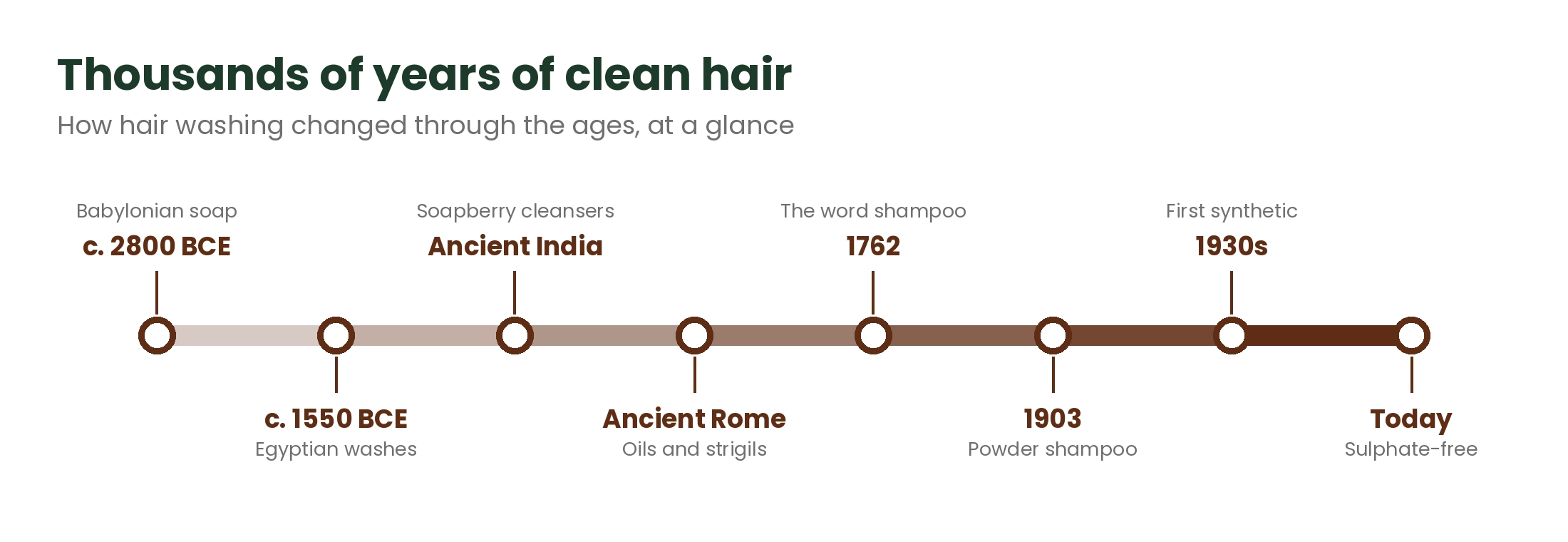
c. 2800 BCE: the Babylonians were making an early soap from fats and ashes.
Ancient times: Egyptians, Indians, Greeks and Romans washed with oils, herbs, soapberries and citrus.
1762: the word "shampoo" entered English from the Hindi chāmpo, meaning to press or knead, a head massage.
1900s: liquid hair soaps arrived, and in 1927 Hans Schwarzkopf improved liquid shampoo for mass production.
1930s: Drene became the first shampoo made with synthetic surfactants instead of soap.
Today: gentle, sulphate-free shampoos with oils like argan and proteins like keratin.
How did people wash their hair before shampoo?
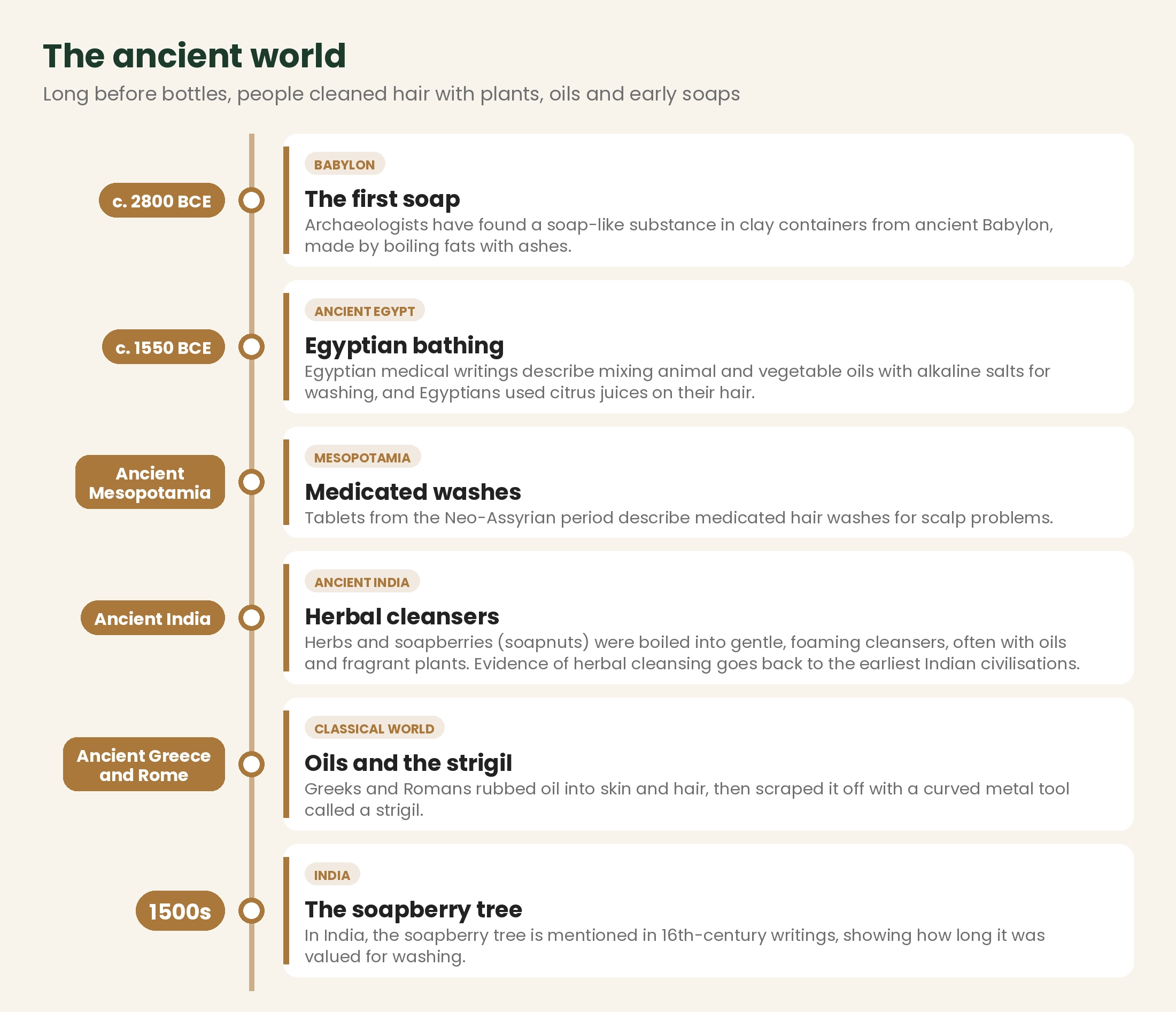
People have been cleaning their hair for thousands of years. Around 2800 BCE, archaeologists believe the Babylonians were already making a soap-like substance by boiling fats with ashes. Egyptian medical writings from around 1550 BCE describe mixing oils with alkaline salts for washing, and Egyptians used citrus juices on their hair.
Tablets from ancient Mesopotamia describe medicated hair washes for scalp problems. In ancient India, herbs and soapberries (soapnuts) were boiled into gentle cleansers that foamed naturally, a tradition still valued in the 1500s. The Greeks and Romans rubbed oil into skin and hair, then scraped it away with a curved metal tool called a strigil.
Where does the word "shampoo" come from?
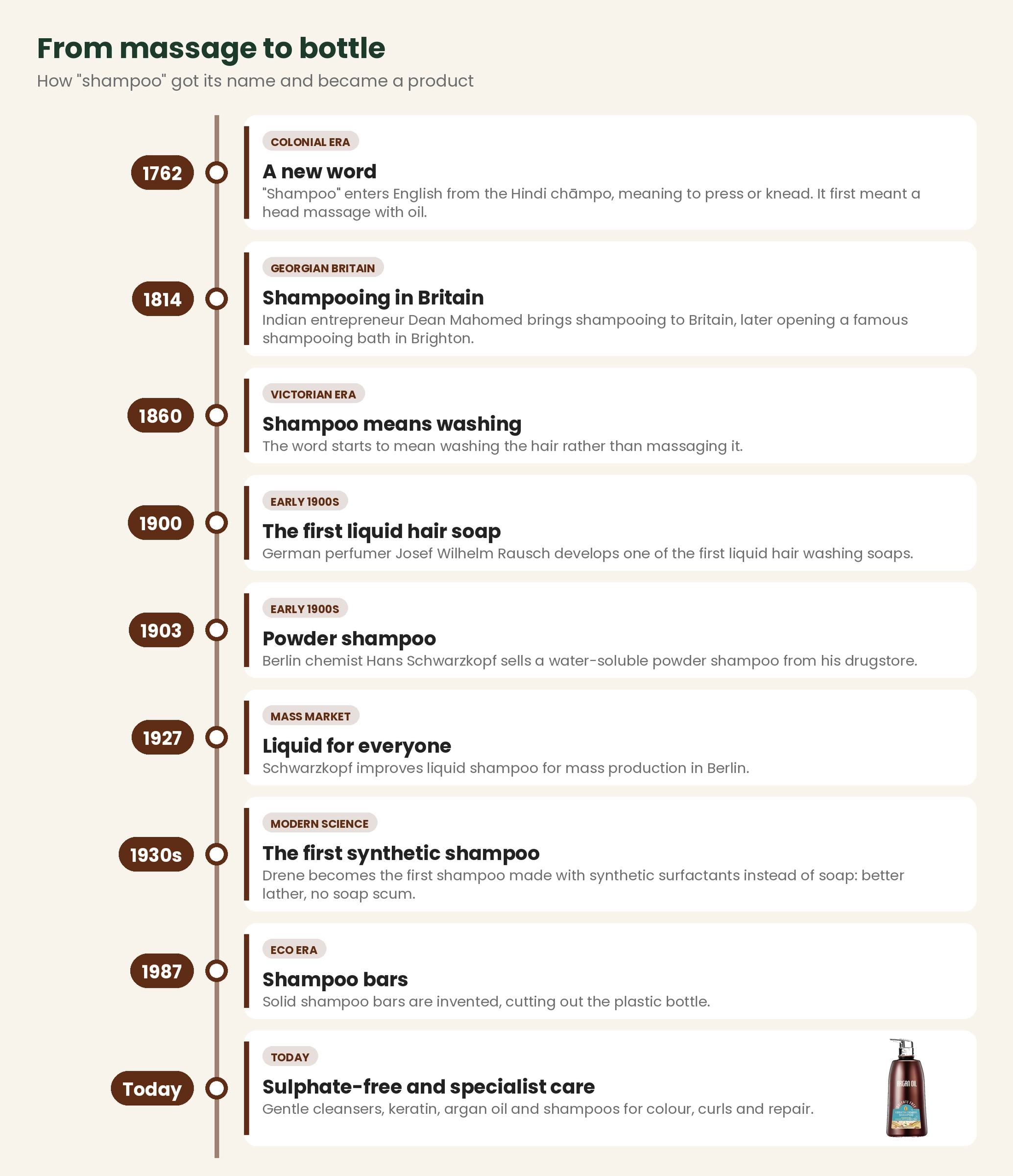
"Shampoo" comes from the Hindi word chāmpo, meaning to press or knead. When it entered English in 1762, it meant a soothing head massage with oil, not washing. In 1814 the Indian entrepreneur Dean Mahomed brought "shampooing" to Britain, later opening a famous shampooing bath in Brighton. By 1860, the word had come to mean washing the hair.
Who invented liquid shampoo?
Around 1900, German perfumer Josef Wilhelm Rausch developed one of the first liquid hair washing soaps. In 1903, Berlin chemist Hans Schwarzkopf sold a water-soluble powder shampoo from his drugstore, and in 1927 he improved liquid shampoo for mass production. His name became one of Europe's best-known hair care brands.
What was the first modern shampoo?
Early shampoos were based on soap, which can leave a dull film on hair, especially in hard water. In the 1930s, Drene became the first shampoo made with synthetic surfactants instead of soap. It lathered well and rinsed clean, and it set the pattern for the shampoos we use today.
Those surfactants are the cleansing ingredients you see on labels today, like SLES and SLS. Some are gentler than others. Read Good sulfates vs bad sulfates and SLES vs SLS to understand the difference.
| When | What happened | Why it mattered |
|---|---|---|
| c. 2800 BCE | Babylonian soap from fats and ashes | The first soap-like cleanser |
| c. 1550 BCE | Egyptian oils and alkaline salts | Early washing recipes |
| Ancient times | Herbs, soapberries, oils and the strigil | Gentle, natural cleansing |
| 1762 | "Shampoo" enters English | Originally a head massage with oil |
| 1814 | Dean Mahomed brings shampooing to Britain | Made "shampooing" fashionable |
| 1860 | Shampoo means washing hair | The meaning we use today |
| 1900 | Liquid hair washing soap (Rausch) | Easier than bar soap |
| 1903 | Schwarzkopf powder shampoo | Easy hair washing at home |
| 1927 | Mass-produced liquid shampoo (Schwarzkopf) | Shampoo for everyone |
| 1930s | Drene, first synthetic shampoo | Better lather, no soap film |
| 1987 | Solid shampoo bars | Less packaging |
| Today | Sulphate-free, argan, keratin | Gentle care for colour and damage |
What does modern shampoo look like?
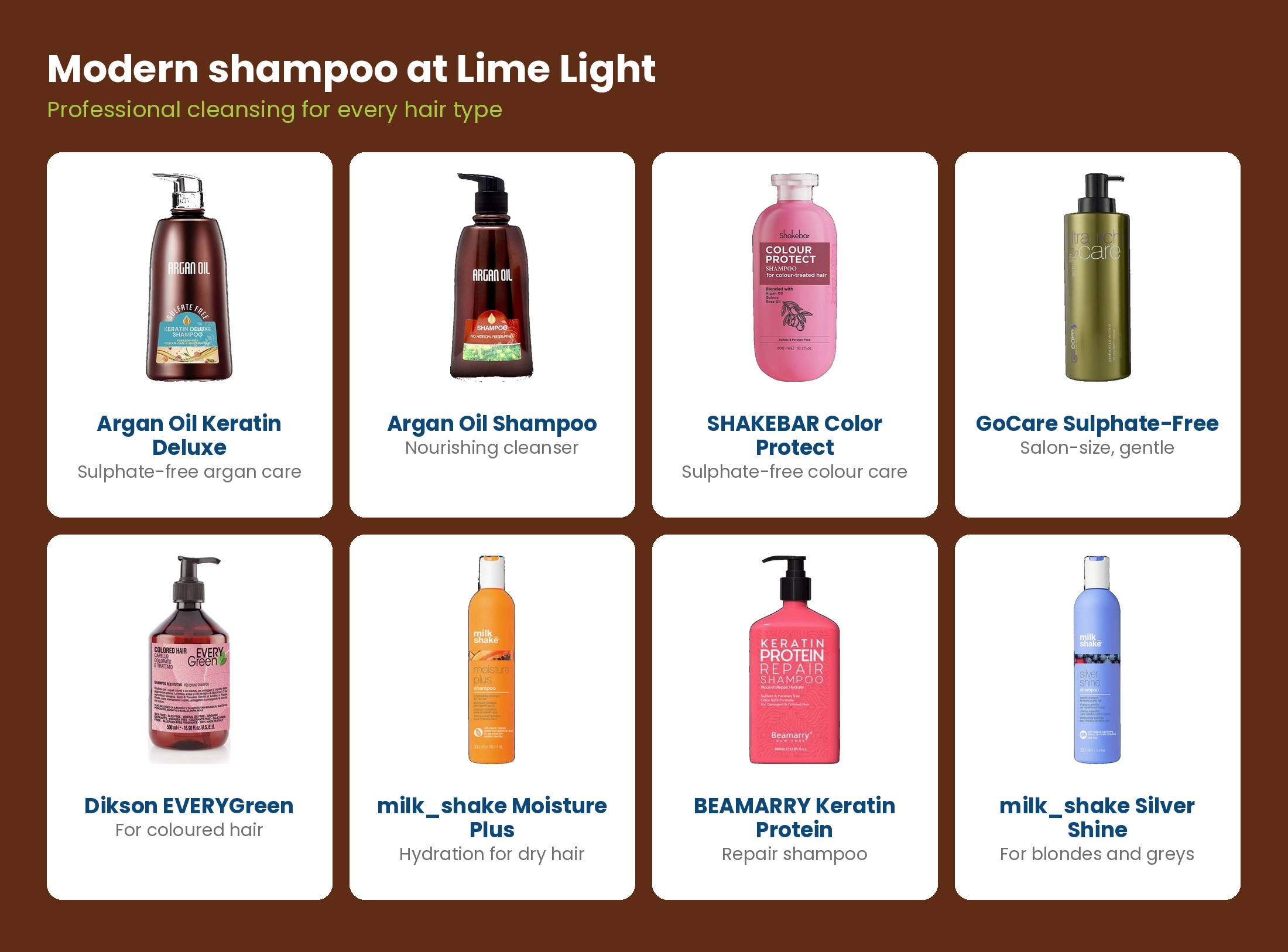
Today's professional shampoos do far more than clean. They are designed for your hair type: sulphate-free formulas protect colour, keratin and proteins help repair, and oils like argan oil add softness and shine. It is a return to the gentle, nourishing care of the past, with the science of today.
Argan Oil Keratin Deluxe Sulphate-Free Shampoo
Our Argan Oil Keratin Deluxe Shampoo brings the story full circle: a gentle, sulphate-free cleanse enriched with argan oil and keratin, for soft, shiny, manageable hair that is kind to colour. Available at Lime Light in a 750ml salon size.
Want to know what is in your bottle? Read How to read hair product labels and Argan oil for hair.
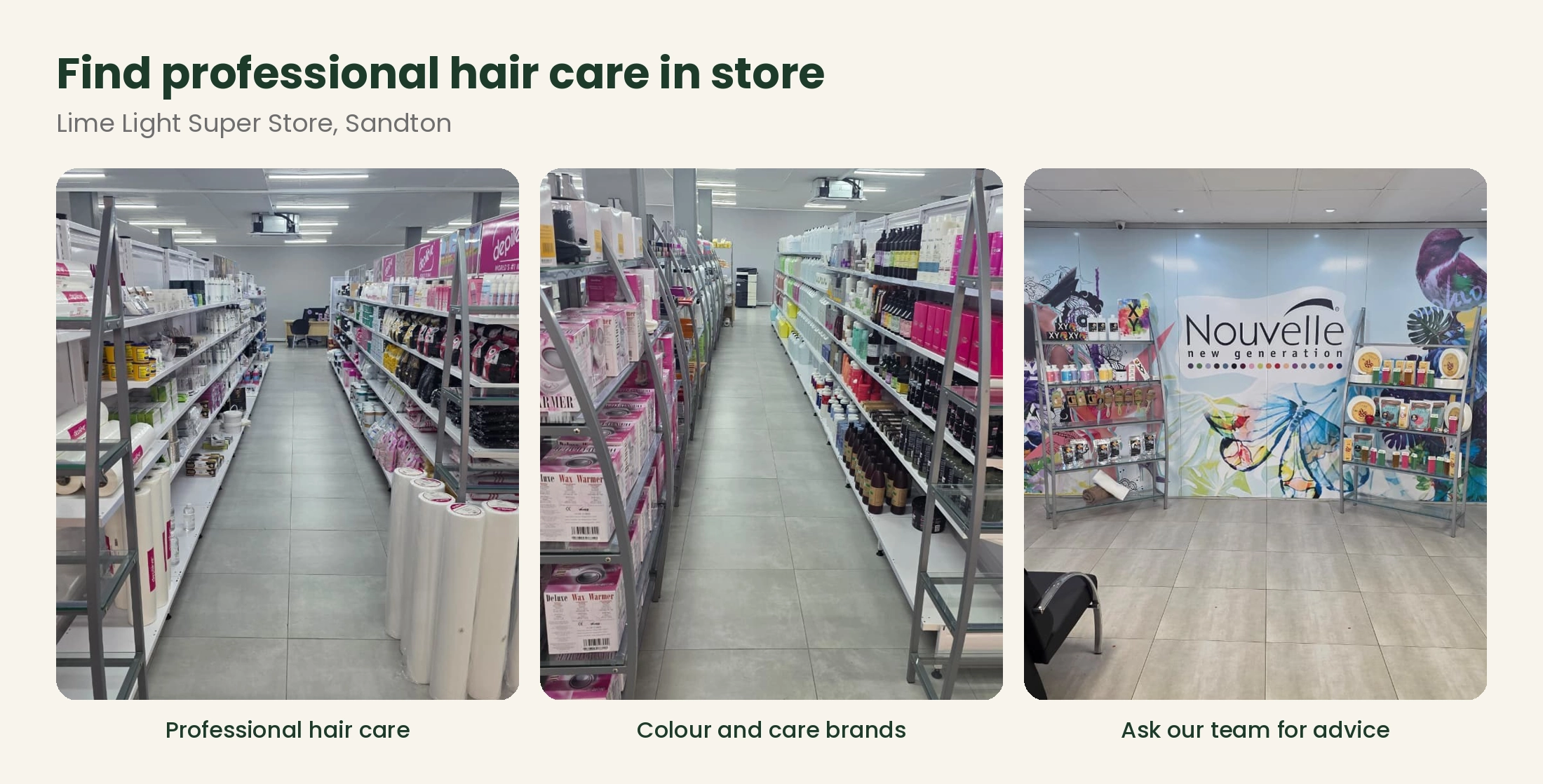
Explore our professional hair care at the Lime Light Super Store, the largest showroom of its kind in South Africa for dedicated wholesale hair and beauty products, at Block B, Tripark, 17 Eastern Service Road, Kelvin, Sandton.
Frequently asked questions
Who invented shampoo?
No single person. Herbal hair washes go back to ancient times. Josef Wilhelm Rausch developed an early liquid hair soap around 1900, Hans Schwarzkopf improved liquid shampoo for mass production in 1927, and Drene was the first synthetic shampoo in the 1930s.
What does the word shampoo mean?
It comes from the Hindi chāmpo, meaning to press or knead. It first meant a head massage with oil.
What did people use before shampoo?
Early soaps made from fats and ashes, oils, citrus juices, herbs and soapberries. Greeks and Romans oiled their hair and scraped it clean with a strigil.
When was soap invented?
Archaeologists believe the Babylonians were making a soap-like substance from fats and ashes around 2800 BCE.
What is the difference between soap and shampoo?
Soap can react with minerals in hard water and leave a dull film. Modern shampoos use synthetic surfactants that rinse clean.
Is sulphate-free shampoo better?
Sulphate-free shampoos are gentler and are a great choice for coloured, dry or treated hair.
Where can I buy argan oil shampoo in South Africa?
At Lime Light: online at limelighthb.co.za, at the Lime Light Super Store in Sandton, and at our branches in Boksburg, Cape Town and Durban.
Shop shampoo with Lime Light
- Shop online: limelighthb.co.za, under Hair Care.
- Visit the Super Store: Block B, Tripark, 17 Eastern Service Road, Kelvin, Sandton.
- Open a trade account: visit our website and hit register, fill in the details and we will approve your account.
- Call us: 011 262 2451 | Email: shop@limelighthb.co.za
More from the blog
 How to make your hair colour last longer: why colour fades and 10 easy ways to stop itWhy hair colour fades, which shades fade fastest, and 10 easy ways to keep your colour rich and glossy, with the best colour-safe products in South Africa.
 The history of hair removal wax: from Stone Age shells to Depilève film waxHow waxing developed, from ancient sugar pastes to the first strip wax in 1972 and Depilève film wax in 2003, plus strip, roll-on and film wax explained.
 The history of nail polish: from ancient China to Gelish gel polish5,000 years of painted nails, from ancient China and Egypt to 1920s lacquers and Gelish, the first gel polish in a bottle, plus the Gelish innovations salons use today.