

 FROM R224.40 WHEN YOU BUY 6
GoCare Shampoo - Sulphate Free - 1000mlSKU: H-HA-SHA-GOC-001R 264,00R 237,60Mix any GoCare6-11R 224,4012+R 211,20In stock
Also called sulphate free shampoo, are silicones bad for hair, parabens in shampoo, alcohol in hair products, INCI ingredient list
"Sulphate-free", "paraben-free", "silicone-free"... hair product labels are full of words most people never learn. Here is a plain English guide to what the ingredient list really tells you, and how to choose the right products for your hair or your salon backwash.
The quick answer
Most professional hair care uses the INCI system (International Nomenclature of Cosmetic Ingredients). It gives every ingredient one standard name, so "water" is written as Aqua and argan oil is Argania Spinosa Kernel Oil, whatever language the bottle is printed in.
Three simple rules make any label easier to read:
Sulphates are surfactants: cleansers that lift oil and dirt and make a rich lather. The three you will see most often are Sodium Lauryl Sulfate (SLS), Sodium Laureth Sulfate (SLES) and Ammonium Lauryl Sulfate (ALS). We explain the differences between them in our most-read article, Understanding the difference between SLES, SLS and ALS in shampoos.
Sulphates are not "bad". They are simply strong. That is perfect for an oily scalp, heavy styling product or a deep clean before a treatment, but it can strip moisture and fade colour faster on dry, curly or colour-treated hair.
| Cleanser on the label | Strength | Best for |
|---|---|---|
| Sodium Lauryl Sulfate (SLS) | Strongest | Oily scalps, deep cleansing, clarifying |
| Sodium Laureth Sulfate (SLES) | Strong but milder than SLS | Everyday shampoos for normal hair |
| Ammonium Lauryl Sulfate (ALS) | Strong | Oily hair, rich lather |
| Sodium Cocoyl Isethionate | Gentle (sulphate-free) | Dry, coloured and sensitive scalps |
| Coco-Glucoside / Decyl Glucoside | Very gentle (sulphate-free) | Colour care, curls, frequent washing |
| Cocamidopropyl Betaine | Mild co-cleanser | Softens harsher cleansers in most shampoos |
Tip for salons: a sulphate-free shampoo at the backwash keeps fresh colour looking brighter for longer, and gives you an easy retail recommendation for clients to use at home.
FROM R224.40 WHEN YOU BUY 6Silicones are the ingredients that make hair feel silky, smooth and shiny. They coat the outside of the strand, cut down frizz, help a brush glide through and protect against heat from blow-dryers and irons. You will spot them by names that end in -cone, -conol or -siloxane.
| Silicone type | Examples on the label | What to know |
|---|---|---|
| Water-soluble | PEG-12 Dimethicone, Dimethicone Copolyol | Rinses out easily with any shampoo |
| Volatile (evaporating) | Cyclopentasiloxane, Cyclomethicone | Gives slip, then evaporates as hair dries |
| Smart or targeted | Amodimethicone | Sticks mostly to damaged areas, so it builds up less |
| Heavier | Dimethicone, Dimethiconol | Best shine and heat protection; can build up on fine hair |
Our honest verdict: silicones are useful, especially in heat protectors, serums and leave-ins. If fine hair starts to feel heavy or flat, use a clarifying or sulphate shampoo once every week or two to reset.

Any product that contains water needs a preservative so bacteria, yeast and mould cannot grow in the bottle. Parabens (such as methylparaben and propylparaben) are one of the oldest and most studied preservatives in cosmetics.
They are used in very small amounts and are regulated. The European Union, for example, sets strict maximum levels and banned five less-studied parabens in 2014. Many brands now choose to be paraben-free because customers ask for it, and preserve their products with alternatives such as phenoxyethanol or sodium benzoate.
 FROM R79.90 WHEN YOU BUY 6
This is one of the most common label myths. The word "alcohol" covers two very different families of ingredients:
| Ingredient on the label | What it does | Good for |
|---|---|---|
| Hydrolyzed Keratin / Hydrolyzed Wheat Protein | Fills gaps in the hair to strengthen it | Damaged, bleached and chemically treated hair |
| Glycerin, Panthenol (pro-vitamin B5) | Humectants that attract and hold moisture | Dry, dull and frizzy hair |
| Argania Spinosa Kernel Oil (argan oil) | Nourishes and adds shine | Dry ends, frizz, finishing |
| Shea Butter (Butyrospermum Parkii) | Rich moisture and softness | Thick, curly and coily hair |
| Citric Acid, Lactic Acid | Keeps the pH slightly acidic | Smooth cuticles and colour care |
| Parfum / Fragrance | Scent | Everyone, except very sensitive scalps |
Why pH matters: hair and scalp sit on the acidic side. Shampoos and conditioners that are slightly acidic help keep the cuticle flat, which means more shine and less colour fade.
 FROM R112.20 WHEN YOU BUY 6
| Your hair | Look for | Go easy on |
|---|---|---|
| Colour-treated | Sulphate-free cleansers, UV filters, acidic pH | SLS and frequent clarifying |
| Dry or frizzy | Oils, butters, glycerin, fatty alcohols | Lots of alcohol denat. |
| Fine or oily | Light formulas, sulphate cleansers, volumising proteins | Heavy dimethicone and butters |
| Damaged or bleached | Hydrolyzed keratin and other proteins, panthenol | Harsh daily cleansing |
| Curly and coily | Gentle cleansers, shea, humectants | Strong sulphates, drying alcohols |
| Sensitive scalp | Fragrance-free, gentle glucoside cleansers | Heavy perfume, harsh sulphates |
Lime Light stocks professional ranges for every ingredient wish list, in salon backwash sizes and retail sizes:
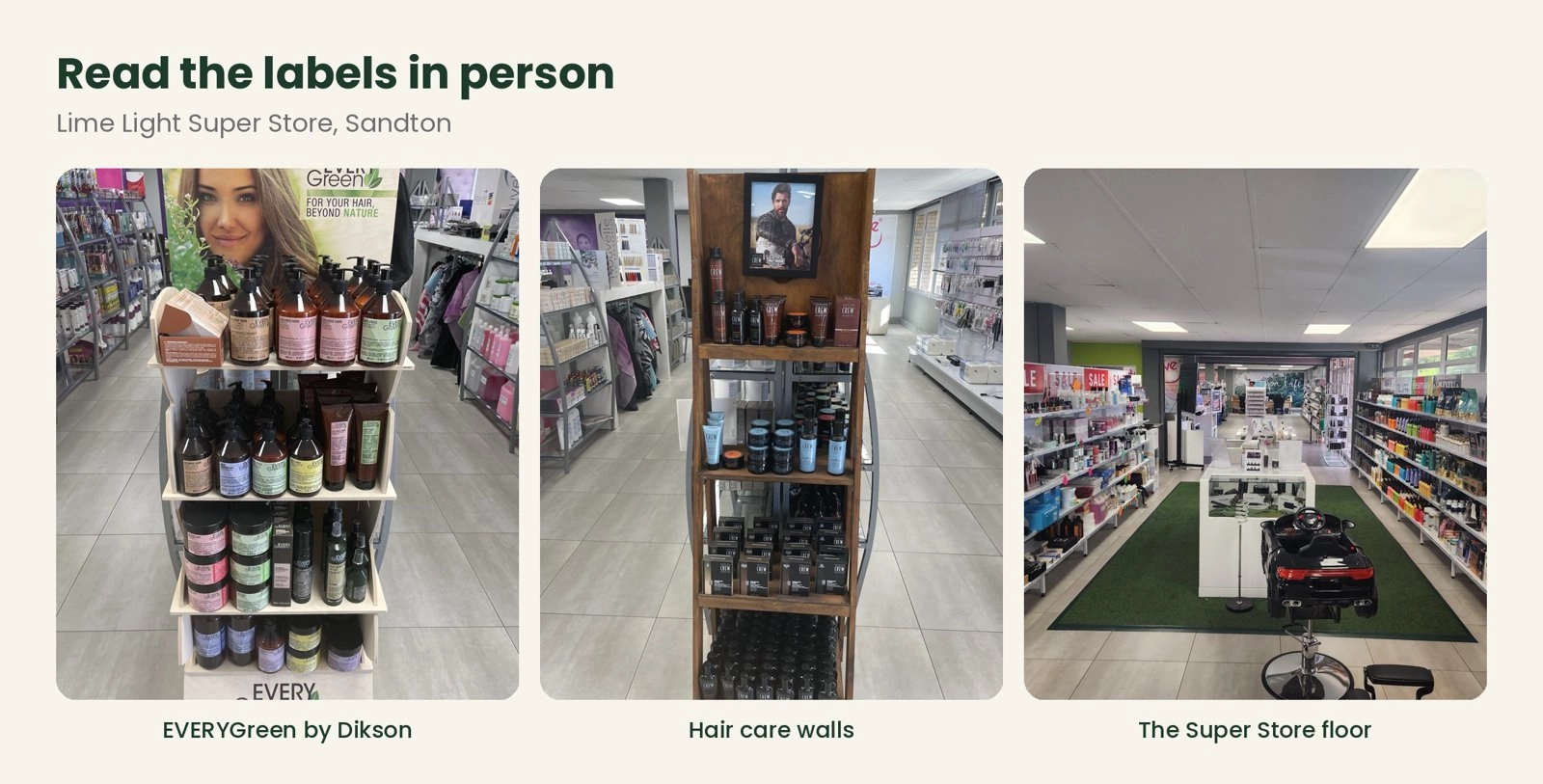
Prefer to read the labels yourself? Visit the Lime Light Super Store, one of the biggest showrooms of its kind in South Africa for dedicated wholesale hair and beauty products, at Block B, Tripark, 17 Eastern Service Road, Kelvin, Sandton, or one of our branches in Cape Town and Durban.
 FROM R224.40 WHEN YOU BUY 6FROM R79.90 WHEN YOU BUY 6FROM R112.20 WHEN YOU BUY 6
 FROM R112.20 WHEN YOU BUY 6
The delivery day for your address, and the time to order by, show at checkout as soon as you enter your address. You can also collect from any branch.
INCI stands for International Nomenclature of Cosmetic Ingredients. It is the standard naming system used on ingredient lists around the world.
It is gentler, which makes it better for colour-treated, dry, curly and sensitive hair. Oily scalps and heavy product users may still prefer a sulphate shampoo, at least now and then.
Gentler cleansers make a softer, smaller lather. It is still cleaning. Try a second wash or work it through with a little more water.
No. Silicones sit on the surface of the hair. They can cause build-up that makes hair feel heavy, which a clarifying shampoo removes.
No. Paraben-free products use a different preservative, such as phenoxyethanol. Water-based products need a preservative to stay safe.
Most shampoos and conditioners are mostly water, which carries the cleansers and conditioning ingredients across the hair and scalp.
At Lime Light: online at limelighthb.co.za, at the Lime Light Super Store in Sandton and at our branches in Cape Town and Durban.
Score 4 out of 5 to pass. Take it as often as you like.
Questions and tips from other salons. The Lime Light education team checks each comment before it shows.
INCIsulphatesiliconeclarifying shampooGoCaremilk_shakeargan oilliftshampooretailfrizzheat protectionlevelproteinmythconditionerkeratinglycerincurl patternAHApHcuticlecolour fadeShakebarDiksonleave-in conditionerBEAMARRYLime Light Super Storetrade accountbuy now, pay laterPayflexLime Chat