


Skincare ingredients explained: vitamin C, hyaluronic acid, niacinamide and more
Also called skincare ingredients, serum ingredients, active ingredients, actives, vitamin C serum, hyaluronic acid serum, niacinamide serum, peptides, ceramides, what serum should I use
Skincare labels are full of ingredient names that sound like a chemistry lesson. The good news is that a handful of key ingredients do most of the work, and once you know what each one is for, choosing the right serum becomes simple. This guide explains the ingredients you will see most often, who they suit, and how to use them together.
The quick answer
- Hydration: hyaluronic acid draws water into the skin.
- Brightening: vitamin C and niacinamide even out tone and boost glow.
- Oil and pores: niacinamide helps balance oil and refine the look of pores.
- Fine lines: peptides and retinoids support smoother, firmer-looking skin.
- Layering: apply from thinnest to thickest, and finish with sunscreen in the morning.
What you will learn
Beauty therapist path- Explain what the main skincare actives do and who they suit
- Layer serums, moisturiser and sunscreen in the right order
- Recommend a serum for a client's main skin concern
What is an active ingredient?
Every skincare product has a base (water, oils, emollients) and the active ingredients that do a specific job. Serums carry the highest concentration of actives in a light texture, which is why they are applied after cleansing and toning and before moisturiser. Start by matching the ingredient to the client's main concern and their skin type.
What are the key skincare ingredients?
| Ingredient | What it does | Best for |
|---|---|---|
| Hyaluronic acid | Draws water into the skin and holds it | Dehydrated, tight or dull skin; all skin types |
| Vitamin C | Antioxidant that brightens and helps protect against environmental damage | Dull skin, uneven tone, pigmentation |
| Niacinamide (vitamin B3) | Strengthens the barrier, balances oil, evens tone | Oily, combination and sensitive skin |
| Peptides | Signal the skin to support firmness | Mature skin, fine lines |
| Ceramides | Rebuild the skin barrier | Dry, sensitised skin |
| Retinoids (vitamin A) | Speed up cell renewal for smoother skin | Fine lines, texture, breakouts (night only) |
| AHAs and BHAs | Exfoliate dead skin cells | Dull skin, congestion, texture |
Hyaluronic acid
Hyaluronic acid is a humectant: it pulls moisture into the skin, so the skin looks plumper and fine dehydration lines soften. It is gentle enough for every skin type and works well under any moisturiser. Apply it to slightly damp skin and seal it in with a moisturiser.
Vitamin C
Vitamin C is an antioxidant. It helps defend the skin against pollution and UV damage and brightens a dull, uneven complexion over time. It is usually used in the morning, under sunscreen, where its antioxidant boost is most useful. Store it closed and out of sunlight, because vitamin C breaks down with light and air.

Niacinamide
Niacinamide is the all-rounder. It helps strengthen the skin barrier, balance oil, refine the look of pores and even out redness and tone. It is well tolerated, so it is a good first serum for clients with oily, combination or easily irritated skin.

Peptides, ceramides and retinoids
- Peptides are short chains of amino acids that help the skin look firmer and smoother. They are gentle and suit mature skin.
- Ceramides are natural fats in the skin barrier. Products with ceramides help dry, sensitised skin hold on to moisture.
- Retinoids (vitamin A) speed up skin renewal. They are powerful, so they are used at night, started slowly, and always paired with daily sunscreen.
How do you layer serums?
- Cleanse the skin.
- Tone to rebalance and prepare the skin.
- Apply serums from the thinnest to the thickest texture, letting each one absorb.
- Moisturise to seal in the serum.
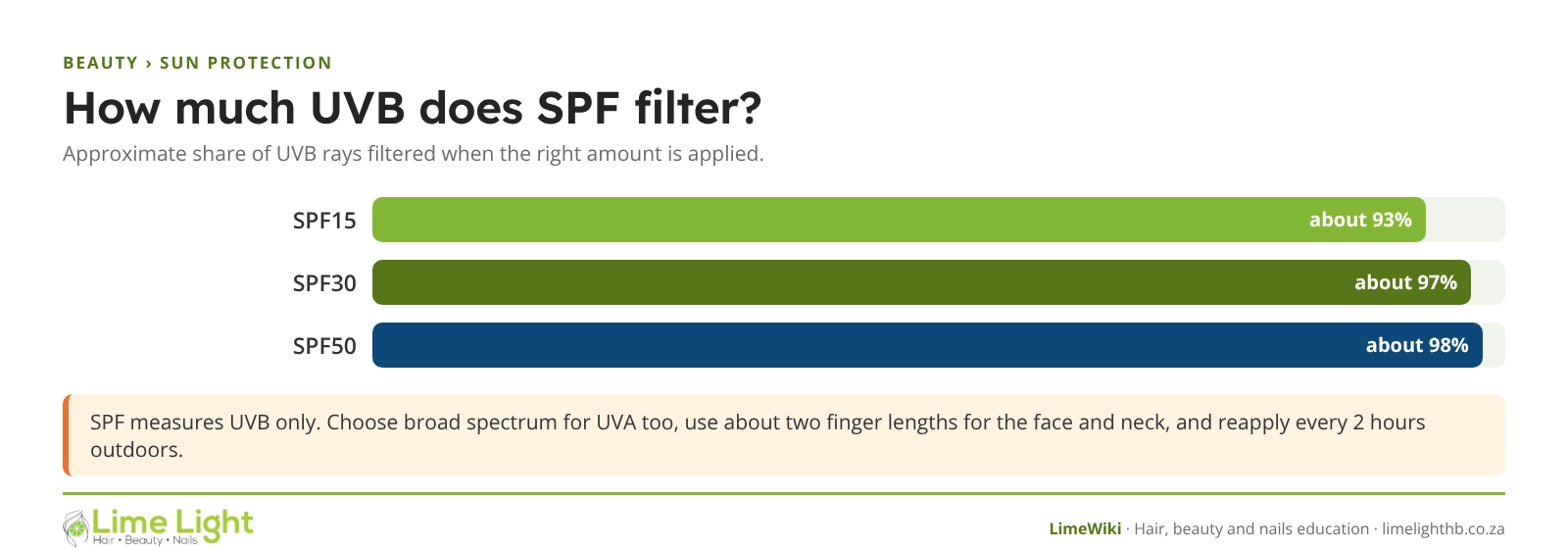
- Finish with sunscreen every morning, even on cloudy days.
A simple rule for combining actives is vitamin C in the morning and retinoids or acids at night. Hyaluronic acid and niacinamide play well with almost everything.


Which serums does Lime Light stock?
- NUSPA Serums: Hyaluronic Acid, Vitamin C and Niacinamide B3 in a generous 60ml size.
- ANESI LAB: professional serums for hydration (3D-Aqua Vital), pigmentation (Luminosity Melabright), renewal (Cellular 3 Booster) and sensitive skin (Harmony SOS Rescue). See Why ANESI LAB? Spanish cosmeceutical skincare for professional results.
- Saloncare Line Corrective Serum for fine lines.
 Low stock

Serum starter kit

Delivery
The delivery day for your address, and the time to order by, show at checkout as soon as you enter your address. You can also collect from any branch.
Ways to pay at Lime Light
- Card or instant EFT through PayFast
- Payflex, in four payments
Shop at Lime Light
- Shop online: search the shop for “serum”
- New to Lime Light? Create an account on the website.
- Email: shop@limelighthb.co.za
- Lime Chat: ask a consultant from the chat button on any page.
Lime Light Sandton (Superstore)Block B, Tripark, 17 Eastern Service Road, Kelvin, Sandton, 2090
Mon-Fri 08:00-17:00 (closed weekends & public holidays)
Lime Light BoksburgThe Terminal Centre, 191 Dr Vosloo Rd, Bartlett, Boksburg, 1459
Mon-Fri 08:00-17:00 (closed weekends & public holidays)
Hands Down M5 ParkUnit 5, M5 Business Park, Eastman Road, Maitland, Cape Town, 7405
Mon-Fri 08:30-17:00; Sat 08:30-12:30
Beautiquip DurbanGate 4, 106 Avondale Rd, Essenwood, Berea, Durban, 4001
Mon-Fri 08:00-17:00 (closed weekends & public holidays)
Sparkle Cape TownBuilding 3, Waverley Business Park, Wyecroft Road, Mowbray, Cape Town
Mon-Fri 08:00-17:00 (closed weekends & public holidays)
Frequently asked questions
What is the best serum for beginners?
Hyaluronic acid or niacinamide. Both are gentle, suit most skin types and work well with other products.
Can I use vitamin C and niacinamide together?
Yes. Most skin tolerates them together. If the skin feels sensitive, use vitamin C in the morning and niacinamide at night.
When should I apply serum?
After cleansing and toning, and before moisturiser and sunscreen.
Should I use vitamin C in the morning or at night?
Usually in the morning under sunscreen, because its antioxidant protection helps during the day.
How long does a serum take to work?
Hydrating serums work straight away. Brightening and smoothing results usually take four to twelve weeks of daily use.
Where can I buy professional serums in South Africa?
At Lime Light: online at limelighthb.co.za, at the Lime Light Super Store in Sandton and at our branches in Cape Town and Durban.
Quick check: 5 questions
Score 4 out of 5 to pass. Take it as often as you like.
Was this helpful?
Comments
Questions and tips from other salons. The Lime Light education team checks each comment before it shows.
Sign in to commentAsk a question or share a tip with other salons. You come back to this article after signing in.Sign in
See also
- Skin types
- Sun protection and SPF explained: UVA, UVB and how much sunscreen to use
- Exfoliation explained: scrubs, enzymes, AHAs, BHAs and professional peels
- What is ANESI LAB? The science-led professional skincare brand from Madrid
- How to do a professional facial, step by step (ANESI LAB and RIBALTA)
- The LimeWiki salon glossary: hair, beauty, nail and barber terms A to Z
What links here
- Eye area care: dark circles, puffiness and fine lines, and how eye creams help
- Facial cleansing and double cleansing: cleansers, sponges and technique (Saloncare and NUSPA)
- Facial serums explained: which serum for which skin concern
- How to choose a moisturiser for every skin type: lotions, creams and gels explained
- Pigmentation and dark spots: causes, prevention and treatment (ANESI LAB Luminosity)
- Skincare routine order: what goes first, morning and night
- Sun protection and SPF explained: UVA, UVB and how much sunscreen to use
- The LimeWiki salon glossary: hair, beauty, nail and barber terms A to Z
- The Shakebar hair care range: find your sulphate-free match
- What is ANESI LAB? The science-led professional skincare brand from Madrid
Who made this article
- Written by
- Lime Light Education
- Uploaded
- 2026-11-24 10:21
- Checked by
- Domonique, 25 Nov 2026
- Version
- 1.2 · Updated · See all changes
Smart Terms in this article
serumhyaluronic acidniacinamidepeptidesretinolSPFactive ingredientmoisturiserskin typehyperpigmentationsensitive skinRPMAHAexfoliationacrylic infillANESI LABtrade accountbuy now, pay laterPayflexLime ChatLime Light Super Store