
 FROM R224.40 WHEN YOU BUY 6
GoCare Shampoo - Sulphate Free - 1000mlSKU: H-HA-SHA-GOC-001R 264,00R 237,60Mix any GoCare6-11R 224,4012+R 211,20In stock
Also called good sulfate vs bad sulfate, sodium laureth sulfate vs sodium lauryl sulfate, ammonium lauryl sulfate, sulfates in shampoo, shampoo pH
Sulfates have a bad reputation, but they are not all the same. Here is the science, in plain English: what SLES, SLS and ALS actually do, how their pH compares, why professional SLES shampoos are kept mildly acidic, and how to choose the right shampoo for colour-treated, dry or oily hair.
The quick answer
SLES, SLS and ALS are all sulfates found in shampoo. They are surfactants: compounds that decrease the surface tension of water, so water can get into the hair fibres and mix with oil and dirt, which can then be washed away. In a shampoo, they work as a wetting agent, emulsifier, degreaser and foaming agent.
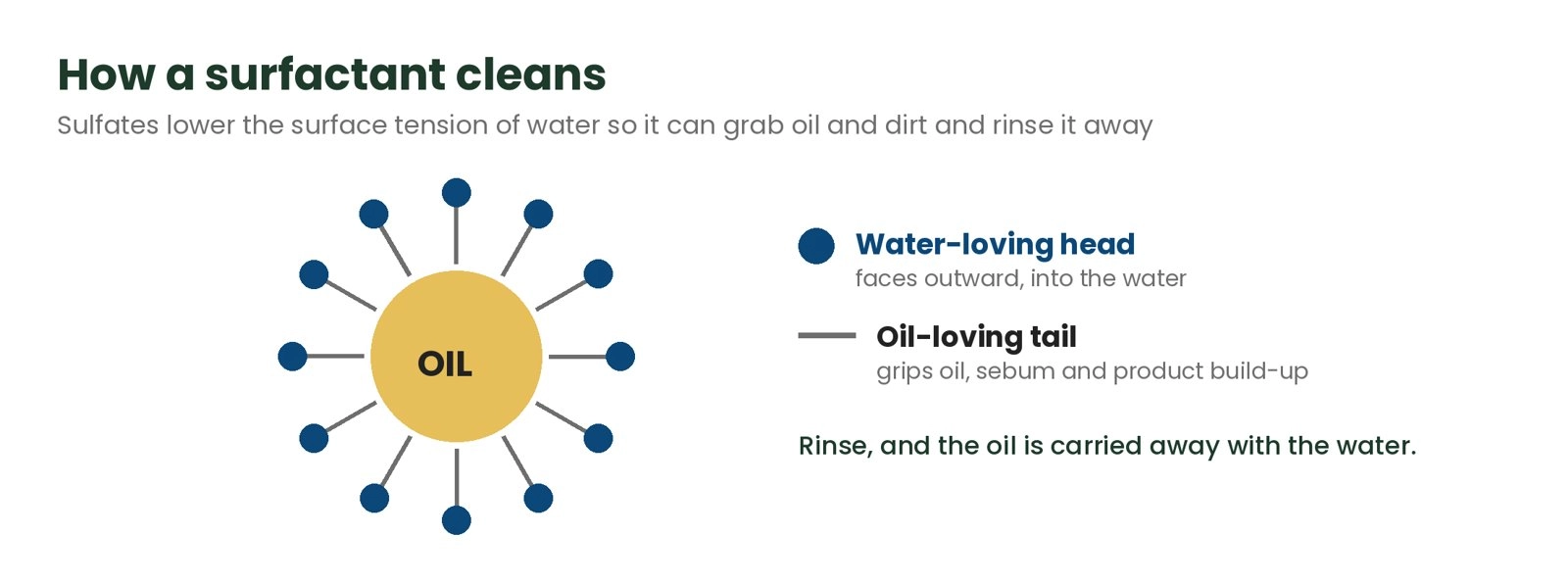
Although Sodium Lauryl Sulfate (SLS) and Ammonium Lauryl Sulfate (ALS) have similar-sounding names and are both anionic surfactants, they have different molecular structures, and that changes how they feel on the hair and scalp.
| Ingredient | What it does | pH |
|---|---|---|
| SLES: Sodium Laureth Sulfate | Wetting agent, emulsifier, degreasing and foaming. Milder than SLS. | Less alkaline than SLS, about 7.0 to 7.5 |
| SLS: Sodium Lauryl Sulfate | Wetting agent, emulsifier, degreasing and foaming. | More alkaline than SLES, about 7.5 to 9.0 |
| ALS: Ammonium Lauryl Sulfate | Removes oils and dirt from hair and skin without drying it out. Foaming. | Slightly less than 7, mildly acidic |
| NaCl: Sodium Chloride (salt) | Thickening agent and preservative. Not a cleanser. | 7, neutral |
Why SLES is milder: the "eth" in Laureth tells you the molecule has been ethoxylated. This makes it larger and gentler on the skin than SLS, which is one reason it is the cleanser most professional brands prefer.
FROM R224.40 WHEN YOU BUY 6In the salon world, SLES is classed as the "good" sulfate compared to SLS, because the pH of SLES is lower than the pH of SLS. A lower, less alkaline pH means the cleanser is kinder to the cuticle, the scalp and colour.
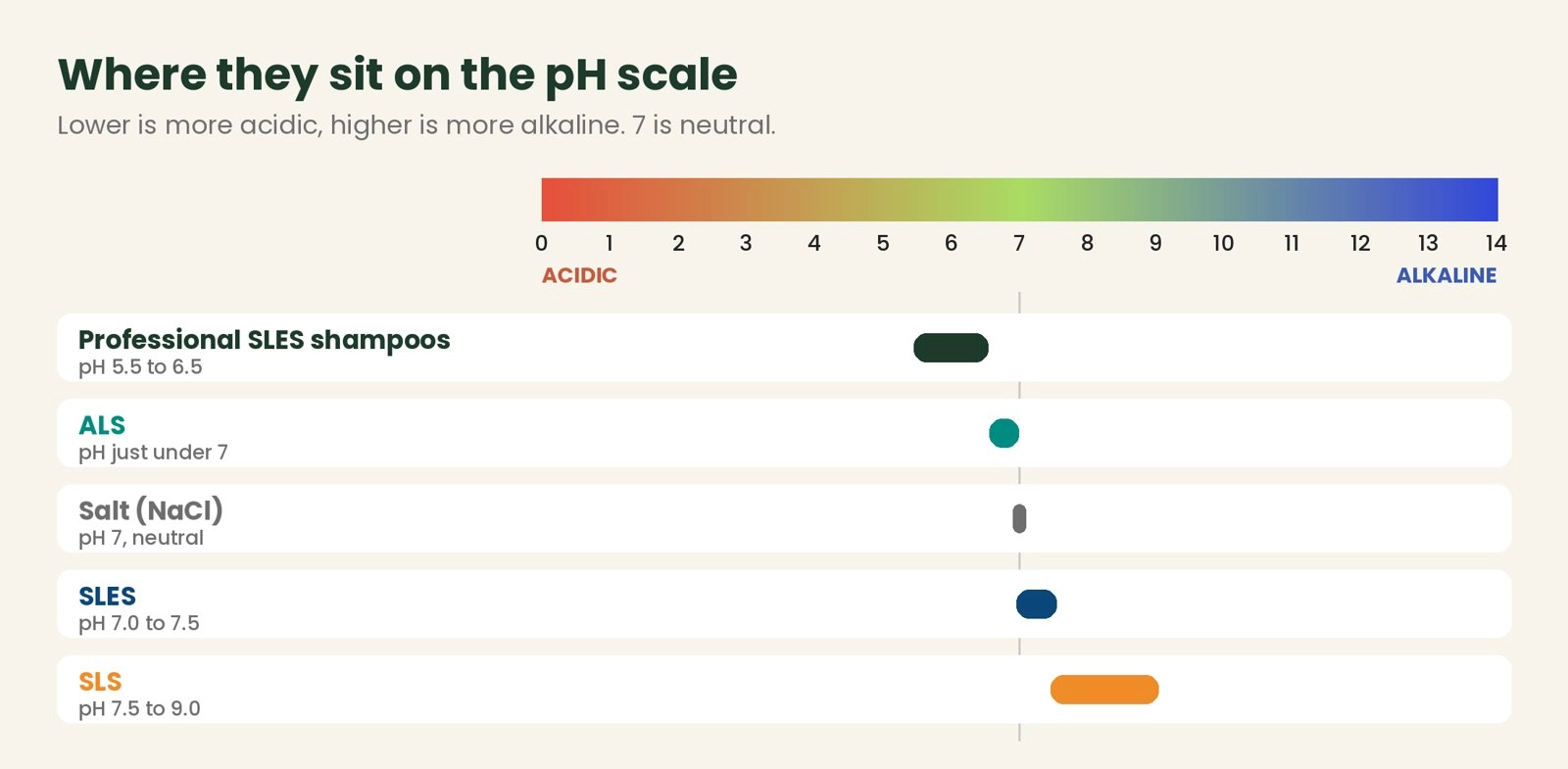
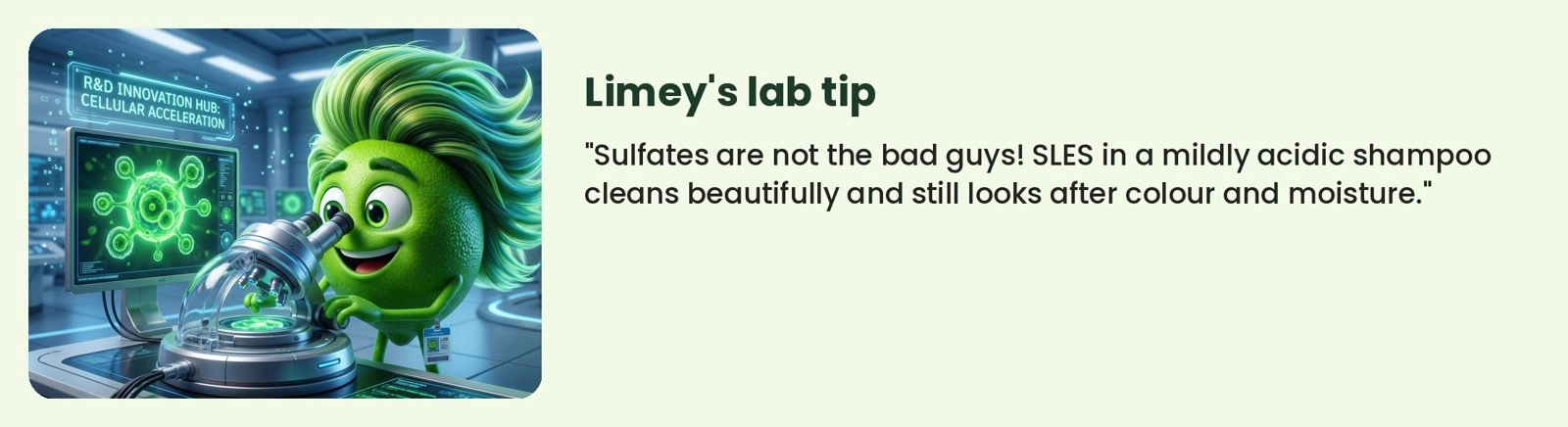

Professional hair care companies that use SLES in their shampoos often balance the finished shampoo at a mildly acidic pH, generally between 5.5 and 6.5. The nourishing and moisturising ingredients added to these shampoos help bring the pH down to an acidic level, which prevents colour stripping and dryness for clients.
Acidic pH shampoos help close the hair cuticle, preventing excessive colour fading, which is crucial for colour-treated hair. A closed cuticle reduces the stripping effect on hair colour and makes colour last longer.
Added ingredients with nourishing or moisturising qualities, such as oils, proteins and humectants, balance out SLES's potential drying effects. They keep hair hydrated, which is essential for smoothness and less frizz.
SLES is an effective cleanser, and formulating it within an acidic pH range minimises its harshness. The result is a thorough cleanse that does not over-strip the hair's natural oils. For clients with colour-treated or dry hair, shampoos with a balanced pH are a good choice because they cleanse without excessive dryness or colour fading.
 FROM R79.90 WHEN YOU BUY 6
| Your hair or scalp | Best choice | Why |
|---|---|---|
| Colour-treated | Mildly acidic SLES shampoo, or sulfate-free | Keeps the cuticle closed so colour lasts |
| Dry or frizzy | Balanced-pH SLES with oils, or sulfate-free | Cleans without stripping natural oils |
| Oily scalp or heavy product use | SLES or ALS shampoo | Strong degreasing and a satisfying lather |
| Sensitive scalp | ALS or a gentle sulfate-free shampoo | Mildly acidic and softer on the scalp |
| Before a colour or treatment service | A clarifying shampoo | Removes build-up so products absorb evenly |
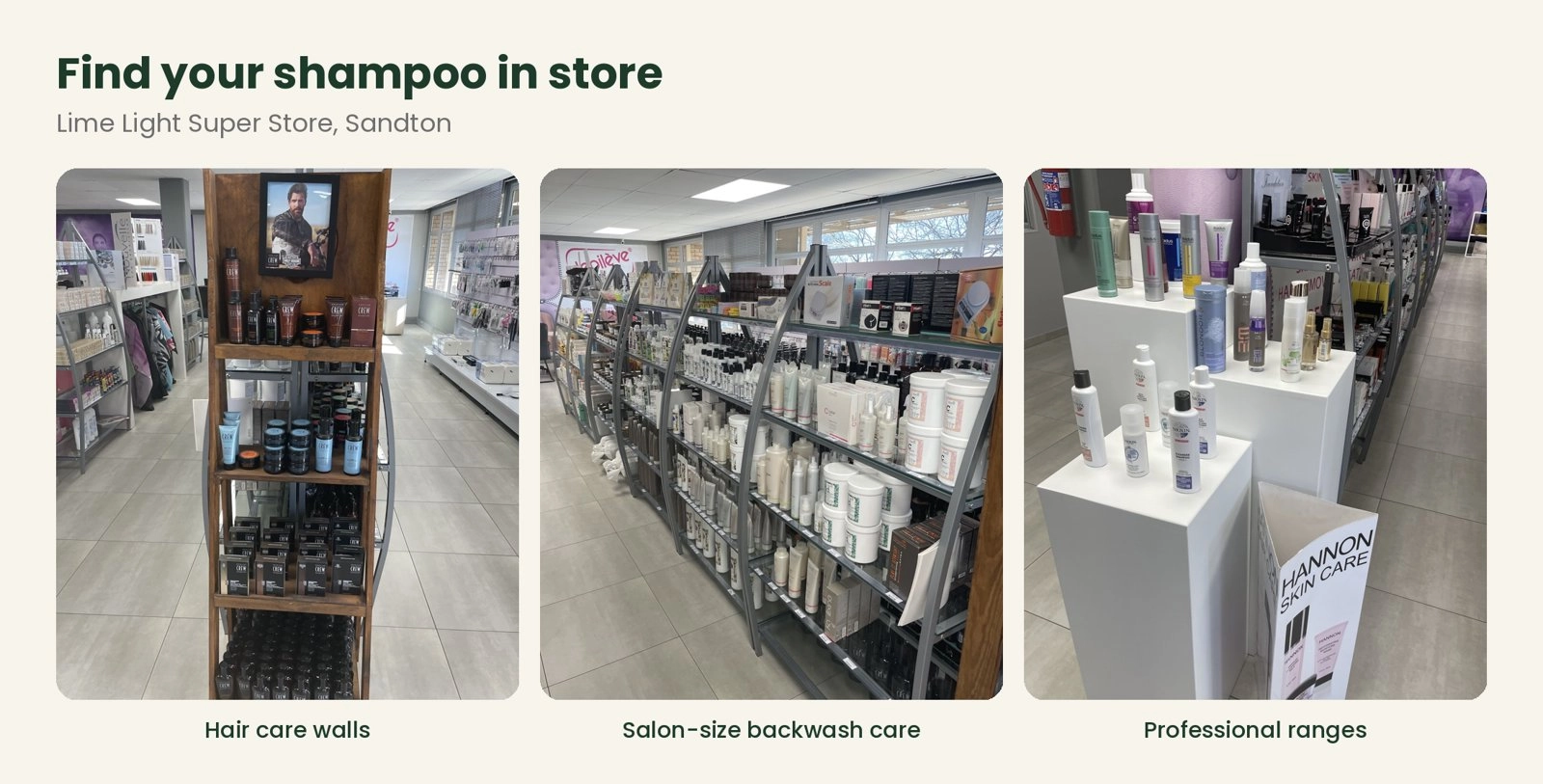
Compare the labels yourself at the Lime Light Super Store, one of the biggest showrooms of its kind in South Africa for dedicated wholesale hair and beauty products, at Block B, Tripark, 17 Eastern Service Road, Kelvin, Sandton, or at our branches in Cape Town and Durban.
 FROM R224.40 WHEN YOU BUY 6FROM R79.90 WHEN YOU BUY 6

 FROM R112.20 WHEN YOU BUY 6
The delivery day for your address, and the time to order by, show at checkout as soon as you enter your address. You can also collect from any branch.
No. SLES (Sodium Laureth Sulfate) is milder and less alkaline than SLS (Sodium Lauryl Sulfate), so it is gentler on hair and scalp.
Of the three, ALS has a pH just under 7, making it mildly acidic and softer on the hair and scalp. SLES is milder than SLS.
Harsh, alkaline cleansers can fade colour faster. A mildly acidic SLES shampoo (pH 5.5 to 6.5) or a sulfate-free shampoo helps colour last.
Sodium chloride (salt) is used to thicken the shampoo and help preserve it. It has a neutral pH of 7.
Professional shampoos made with SLES are usually balanced at a mildly acidic pH of about 5.5 to 6.5.
Yes. They use gentler cleansers, so they lather less, but they still clean. Oily scalps may like a sulfate shampoo now and then.
At Lime Light: online at limelighthb.co.za, at the Lime Light Super Store in Sandton and at our branches in Cape Town and Durban.
Score 4 out of 5 to pass. Take it as often as you like.
Questions and tips from other salons. The Lime Light education team checks each comment before it shows.
sulphatepHshampooLimeycuticleliftlevelcolour fadeproteinfrizzsilicone build-upclarifying shampooretailGoCareShakebarmilk_shakeDiksonBEAMARRYtonerLime Light Super Storetrade accountbuy now, pay laterPayflexLime Chat