


Dikson DIKSOPRIME Super Keratin Revitalizing Mask 500mlSKU: H-HA-CON-DIK-112R 165,00R 140,25In stock
Also called hair anatomy, structure of hair, layers of the hair, hair shaft
Hair structure is how a single hair is built: three layers, one inside the other, made almost entirely of a protein called keratin. Knowing the layers explains why hair shines or frizzes, why colour takes or fades, and what damage really is.
The quick answer
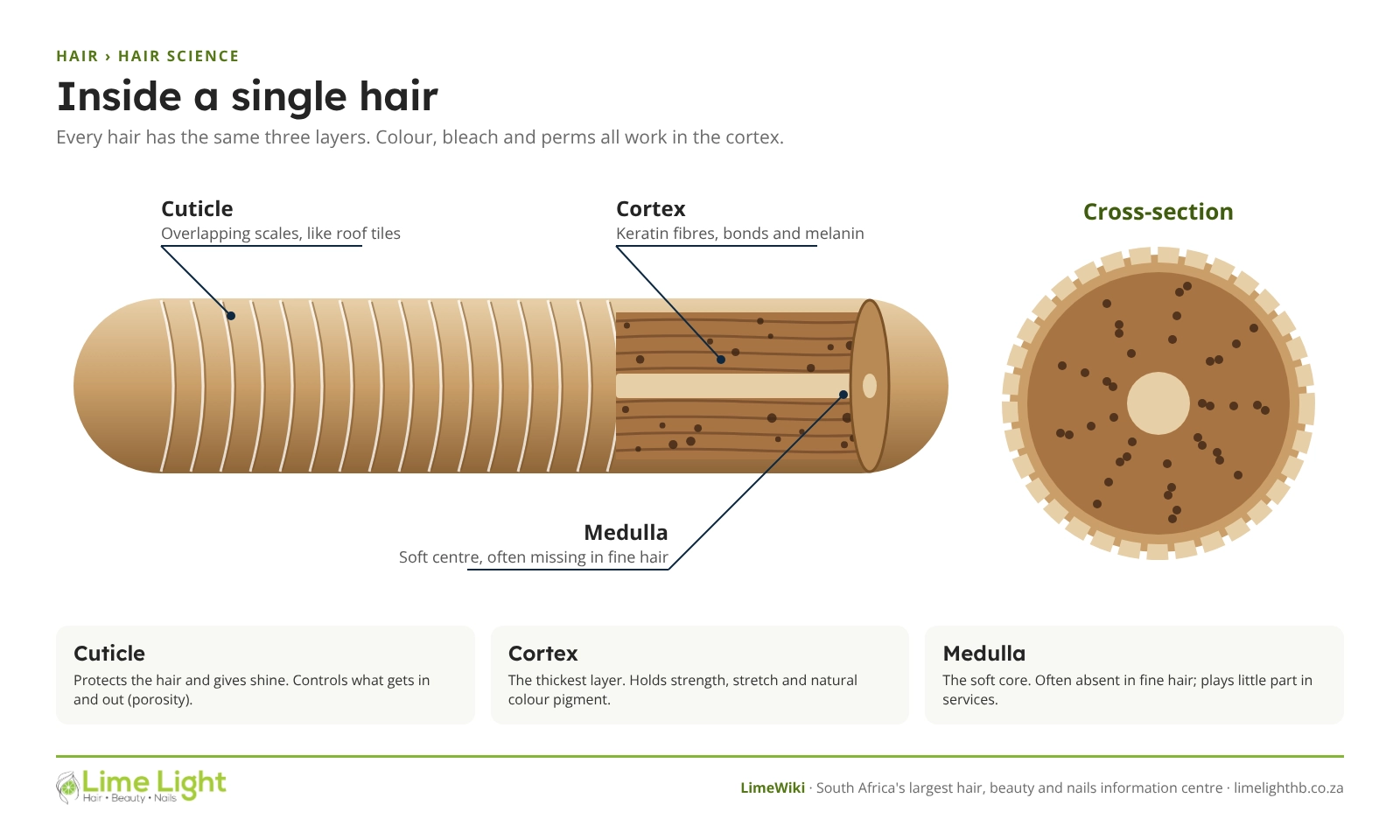
Every hair that grows out of the scalp (the hair shaft) has the same three layers.[1]
| Layer | Where | What it does | Why a stylist cares |
|---|---|---|---|
| Cuticle | Outside | Overlapping flat cells, like roof tiles, that protect the hair | Decides shine, smoothness, porosity and how product gets in |
| Cortex | Middle, the thickest part | Holds the keratin, the bonds and the natural pigment | Decides strength, stretch and colour. Colour and perms work here |
| Medulla | Centre | A soft core, often missing in fine hair | Plays very little part in salon services |
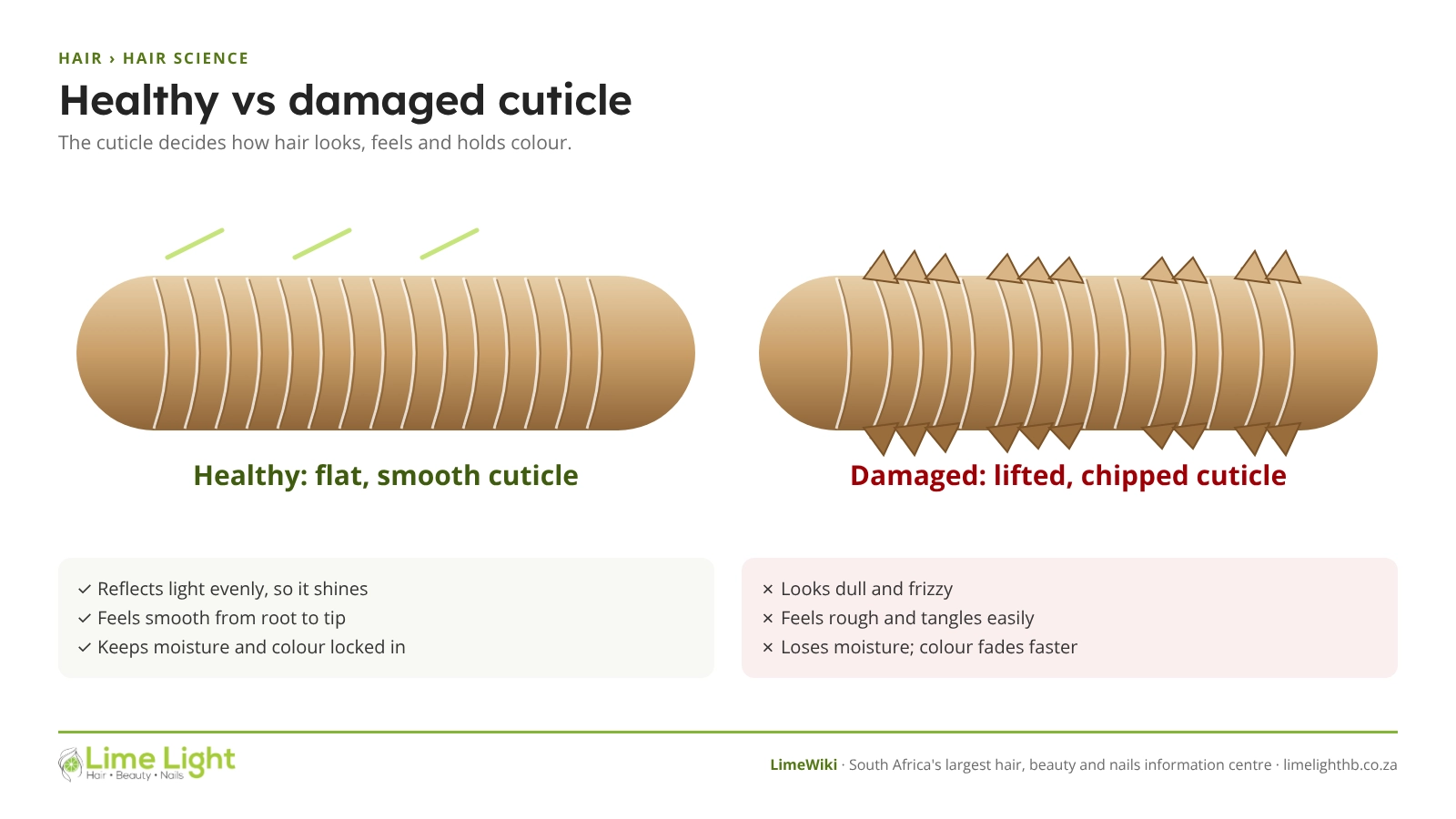
The cuticle is the hair's armour. It is made of several layers of flat, see-through cells that overlap from the root towards the tips. When the cuticle lies flat, light reflects off it evenly, so hair looks shiny and feels smooth. When it is lifted or chipped, hair looks dull, tangles easily and feels rough.
The cuticle also controls what goes in and out of the hair. A closed cuticle keeps moisture in and colour locked inside. A raised or damaged cuticle lets water, colour and protein escape, which is why damaged hair dries out and colour fades faster. This is called porosity (see Hair porosity).
The cortex is where almost everything important happens. It is made of long keratin fibres twisted together like a rope, held in place by three kinds of bonds.[1]
| Bond | Strength | What breaks it | What it means in the salon |
|---|---|---|---|
| Hydrogen bonds | Weak | Water and heat | Why a blow-dry or set holds until the hair gets wet again |
| Salt bonds | Weak | Changes in pH | Why the pH of a product matters |
| Disulphide bonds | Very strong | Perms, relaxers, bleach, very high heat | Why chemical services change hair permanently, and why overdoing them or flat irons that are too hot cause breakage |
The cortex also holds melanin, the natural colour pigment. There are two kinds: eumelanin (brown and black) and pheomelanin (red and yellow). The mix decides a client's natural shade. Grey hair simply has no melanin left. Permanent colour and bleach both work in the cortex, so the cuticle has to be opened first: the alkaliser in the product swells the hair and lifts the cuticle, and the developer then does its work inside (see Hydrogen peroxide developer).
Healthy hair is slightly acidic, at about pH 4.5 to 5.5.[2] Alkaline products, such as tints and relaxers, swell the hair and lift the cuticle so they can reach the cortex. Acidic products, such as most conditioners and after-colour treatments, help the cuticle lie flat again. That is why a colour service should always end with an acidic, colour-care conditioner or treatment.

Treatments cannot bring damaged hair back to life, because the hair shaft is not living tissue. What they can do is fill and smooth: keratin and protein treatments fill gaps in the cortex and cuticle, bond builders help protect the internal bonds during lightening, and conditioners and masks smooth the cuticle so hair looks and feels healthier. Heat protection reduces damage from dryers and irons before it happens.


 FROM R106.25 WHEN YOU BUY 6
Only the root inside the follicle is alive. The hair you can see is dead keratin, so it cannot heal itself. That is why prevention and gentle services matter.
A damaged cuticle cannot close properly, so colour molecules wash out of the cortex more easily with every shampoo.
Often not. Fine and very light hair frequently has no medulla at all, and it makes little difference to services.
No. Split-end products glue them together for a while, but the only real fix is a trim.
At Lime Light, online at limelighthb.co.za or at any Lime Light branch. Branch details and contact numbers are at the end of this page.
Score 3 out of 5 to pass. Take it as often as you like.
Questions and tips from other salons. The Lime Light education team checks each comment before it shows.
proteinkeratincuticlecortexmedullaporosityfrizzbleachpermpHconditionerheat protectionhair shaftmelaninhydrogen bondblowoutdisulphide bondrelaxerflat ironpermanent colourdeveloperkeratin treatmentclient record cardstrand testbond builderconsultationDiksonshampoosplit endshair botoxShakebarfollicle