

Good sulfate vs bad sulfate: the science behind SLES, SLS and ALS in your shampoo
Lime Light Hair & Beauty · 19 November 2026 · 6 min read

Sulfates have a bad reputation, but they are not all the same. Here is the science, in plain English: what SLES, SLS and ALS actually do, how their pH compares, why professional SLES shampoos are kept mildly acidic, and how to choose the right shampoo for colour-treated, dry or oily hair.
Published 15 January 2027 by Lime Light Hair & Beauty Products.
The quick answer
What are sulfates? Cleansers (surfactants) in shampoo. They act as a wetting agent, emulsifier, degreaser and foaming agent.
SLES (Sodium Laureth Sulfate) is the "good" sulfate: milder and less alkaline than SLS, at around pH 7.0 to 7.5.
SLS (Sodium Lauryl Sulfate) is the "bad" sulfate: more alkaline, at around pH 7.5 to 9.0, so it can be harsher on hair and scalp.
ALS (Ammonium Lauryl Sulfate) has a pH just under 7, making it mildly acidic and softer on the hair and scalp.
Professional SLES shampoos are usually balanced at a mildly acidic pH of 5.5 to 6.5, which helps colour last and stops dryness.
Salt (NaCl) on the label is not a cleanser. It thickens the shampoo and helps preserve it.
What are sulfates in shampoo?
SLES, SLS and ALS are all sulfates found in shampoo. They are surfactants: compounds that decrease the surface tension of water, so water can get into the hair fibres and mix with oil and dirt, which can then be washed away. In a shampoo, they work as a wetting agent, emulsifier, degreaser and foaming agent.
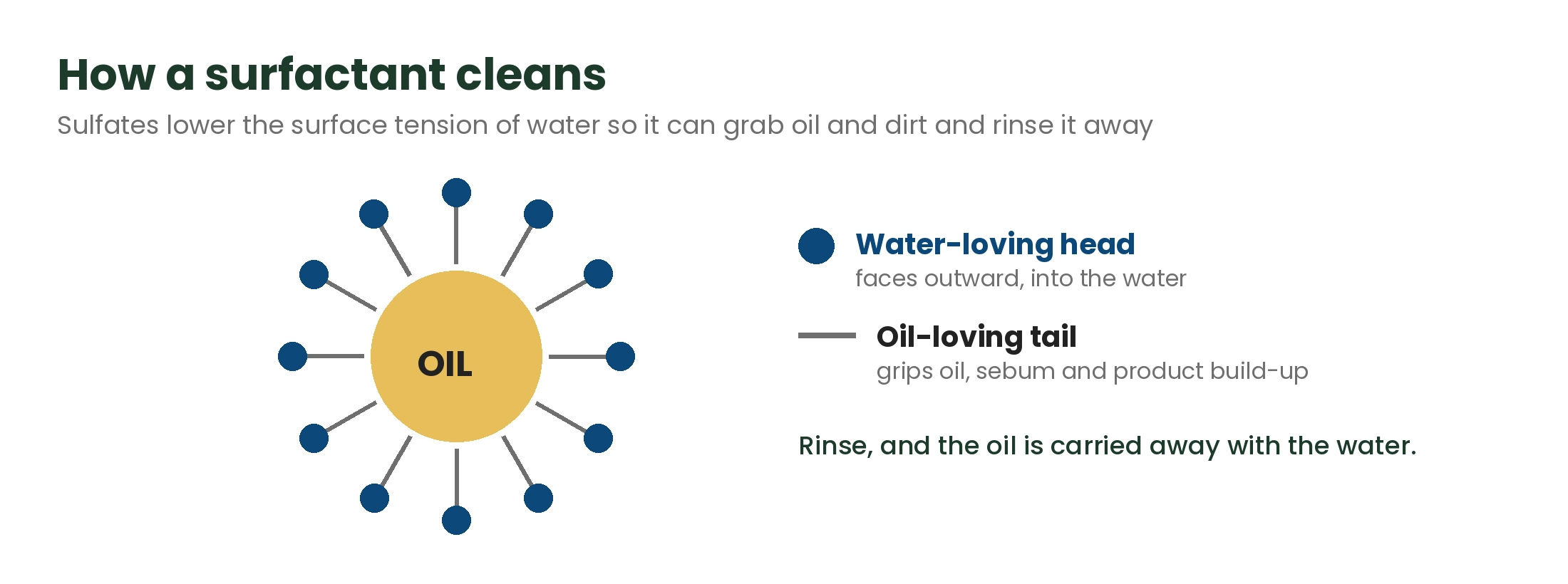
Although Sodium Lauryl Sulfate (SLS) and Ammonium Lauryl Sulfate (ALS) have similar-sounding names and are both anionic surfactants, they have different molecular structures, and that changes how they feel on the hair and scalp.
What is the difference between SLES, SLS and ALS?
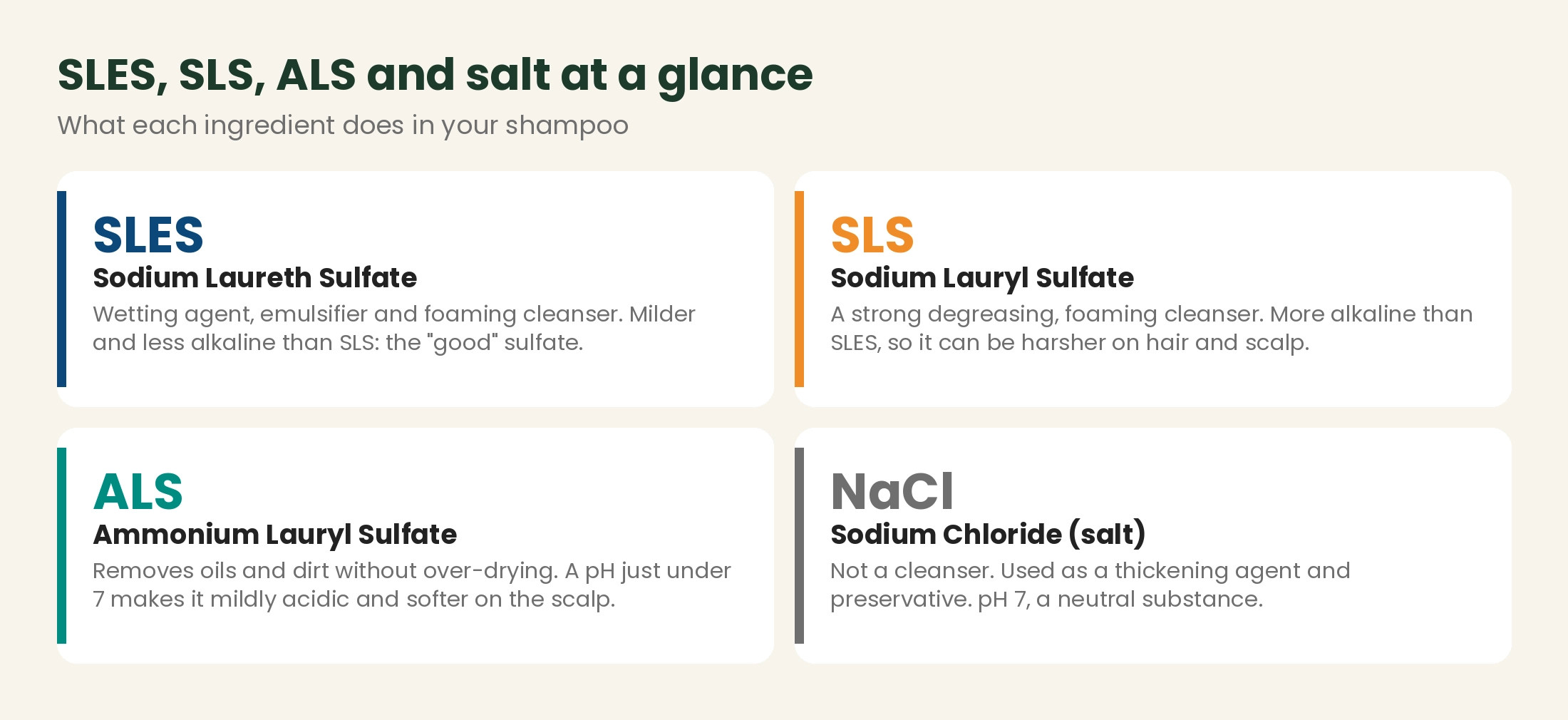
| Ingredient | What it does | pH |
|---|---|---|
| SLES: Sodium Laureth Sulfate | Wetting agent, emulsifier, degreasing and foaming. Milder than SLS. | Less alkaline than SLS, about 7.0 to 7.5 |
| SLS: Sodium Lauryl Sulfate | Wetting agent, emulsifier, degreasing and foaming. | More alkaline than SLES, about 7.5 to 9.0 |
| ALS: Ammonium Lauryl Sulfate | Removes oils and dirt from hair and skin without drying it out. Foaming. | Slightly less than 7, mildly acidic |
| NaCl: Sodium Chloride (salt) | Thickening agent and preservative. Not a cleanser. | 7, neutral |
Why SLES is milder: the "eth" in Laureth tells you the molecule has been ethoxylated. This makes it larger and gentler on the skin than SLS, which is one reason it is the cleanser most professional brands prefer.
Is there a good sulfate and a bad sulfate?
In the salon world, SLES is classed as the "good" sulfate compared to SLS, because the pH of SLES is lower than the pH of SLS. A lower, less alkaline pH means the cleanser is kinder to the cuticle, the scalp and colour.
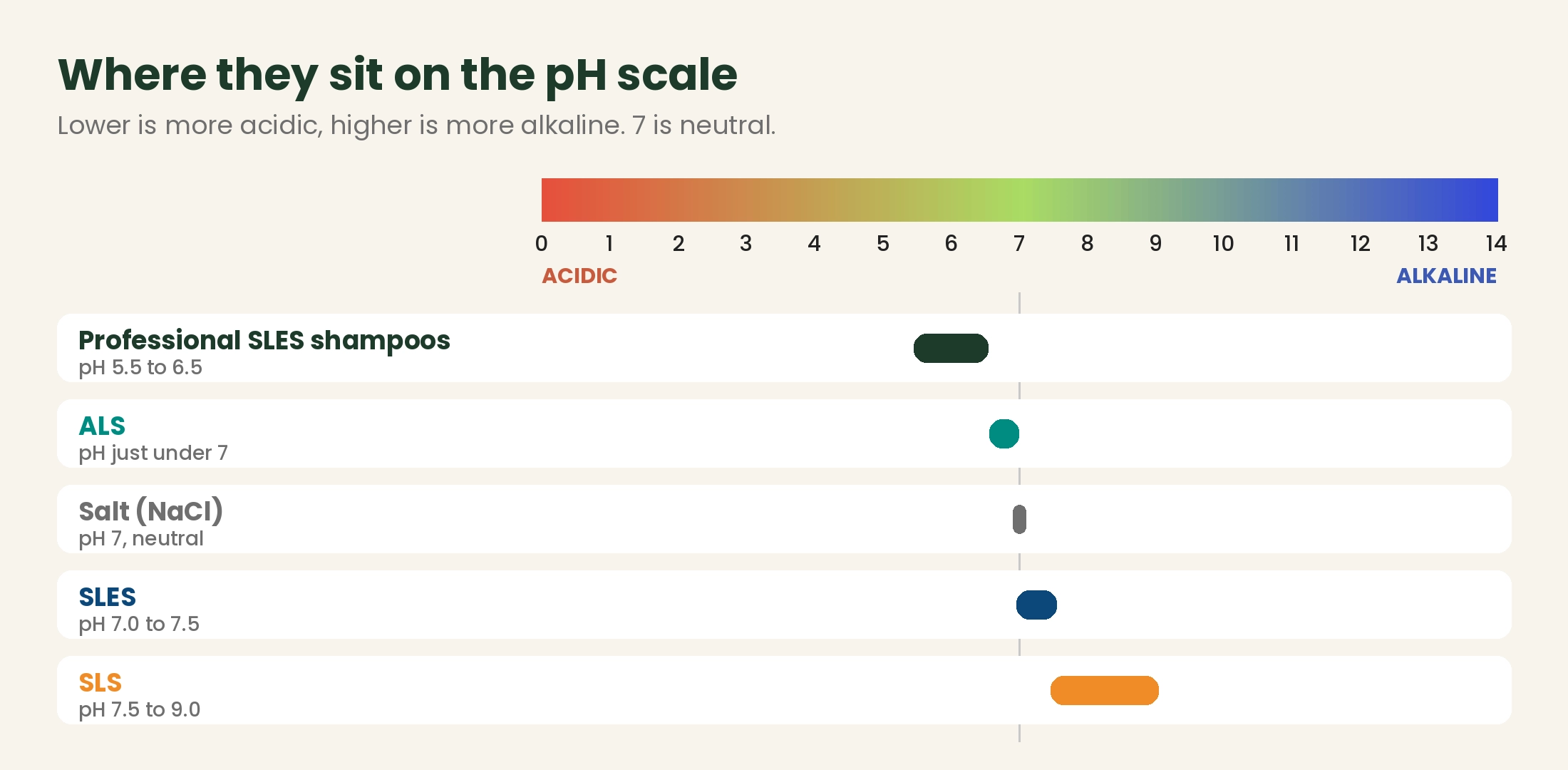
- SLES (Sodium Laureth Sulfate): pH 7.0 to 7.5
- SLS (Sodium Lauryl Sulfate): pH 7.5 to 9.0
Why do professional shampoos keep a mildly acidic pH?
Professional hair care companies that use SLES in their shampoos often balance the finished shampoo at a mildly acidic pH, generally between 5.5 and 6.5. The nourishing and moisturising ingredients added to these shampoos help bring the pH down to an acidic level, which prevents colour stripping and dryness for clients.
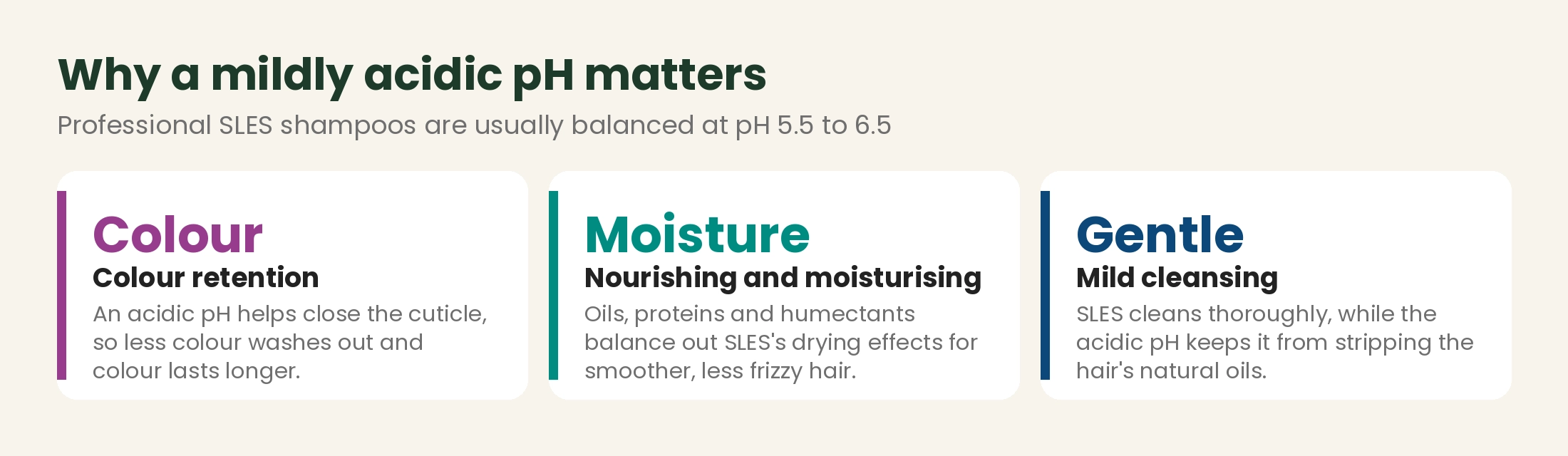
Colour retention
Acidic pH shampoos help close the hair cuticle, preventing excessive colour fading, which is crucial for colour-treated hair. A closed cuticle reduces the stripping effect on hair colour and makes colour last longer.
Moisturising and nourishing properties
Added ingredients with nourishing or moisturising qualities, such as oils, proteins and humectants, balance out SLES's potential drying effects. They keep hair hydrated, which is essential for smoothness and less frizz.
Mild cleansing without over-stripping
SLES is an effective cleanser, and formulating it within an acidic pH range minimises its harshness. The result is a thorough cleanse that does not over-strip the hair's natural oils. For clients with colour-treated or dry hair, shampoos with a balanced pH are a good choice because they cleanse without excessive dryness or colour fading.
Should I use a sulfate or sulfate-free shampoo?
| Your hair or scalp | Best choice | Why |
|---|---|---|
| Colour-treated | Mildly acidic SLES shampoo, or sulfate-free | Keeps the cuticle closed so colour lasts |
| Dry or frizzy | Balanced-pH SLES with oils, or sulfate-free | Cleans without stripping natural oils |
| Oily scalp or heavy product use | SLES or ALS shampoo | Strong degreasing and a satisfying lather |
| Sensitive scalp | ALS or a gentle sulfate-free shampoo | Mildly acidic and softer on the scalp |
| Before a colour or treatment service | A clarifying shampoo | Removes build-up so products absorb evenly |
For salons
Use a balanced-pH or sulfate-free shampoo at the backwash after colour, and recommend the same for home care. It protects your colour work, keeps clients happy between visits, and is an easy retail recommendation. See also our guide How to read a hair product label.
Which shampoos does Lime Light stock?
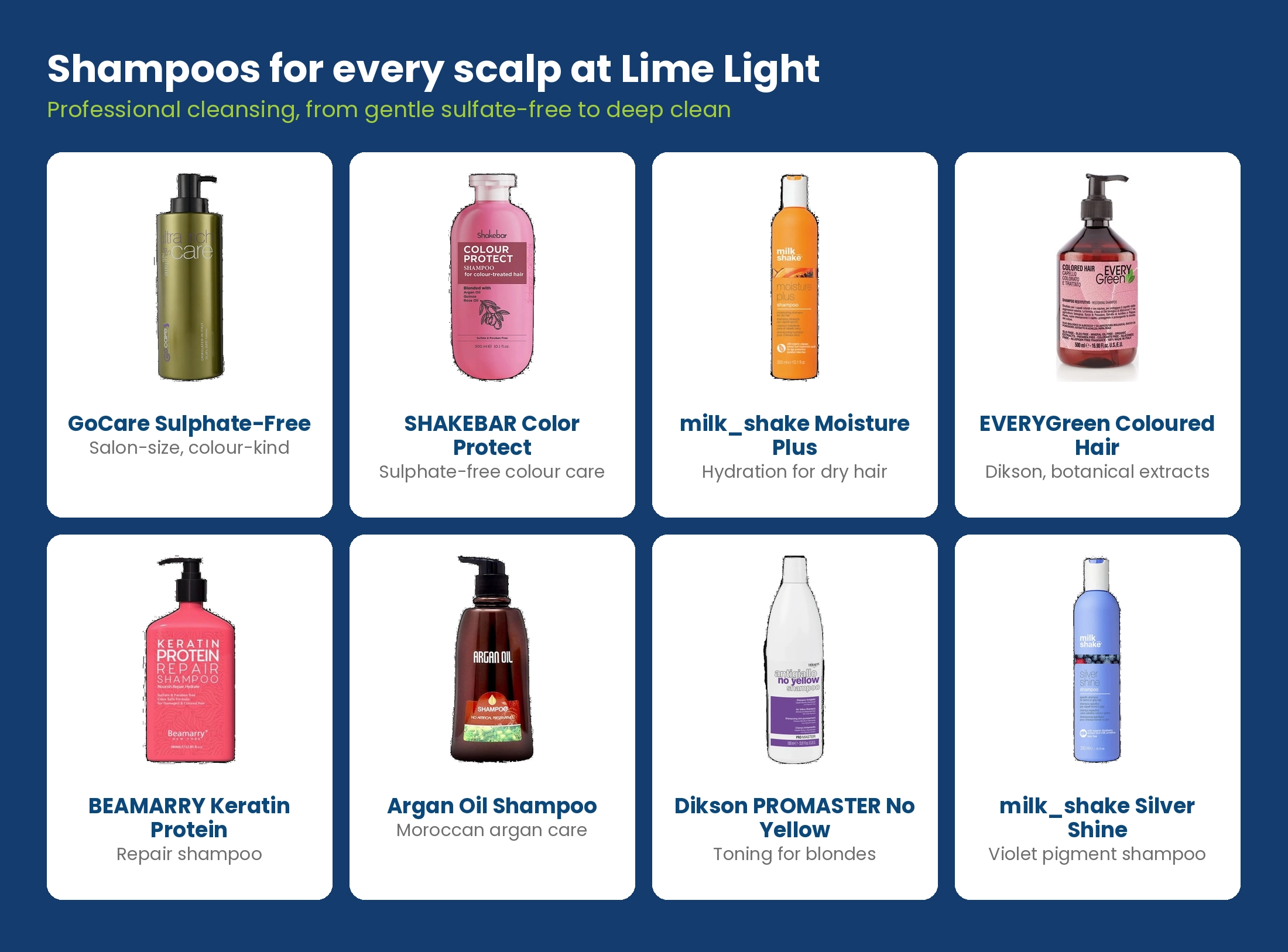
- GoCare Sulphate-Free Shampoo: salon-size, gentle cleansing that helps reduce colour fade.
- SHAKEBAR: sulphate-free shampoos matched to colour, volume, repair and curls.
- milk_shake, EVERYGreen by Dikson and BEAMARRY: professional ranges for dry, coloured and damaged hair.
- Toning shampoos: milk_shake Silver Shine and Dikson PROMASTER No Yellow for blondes and greys.
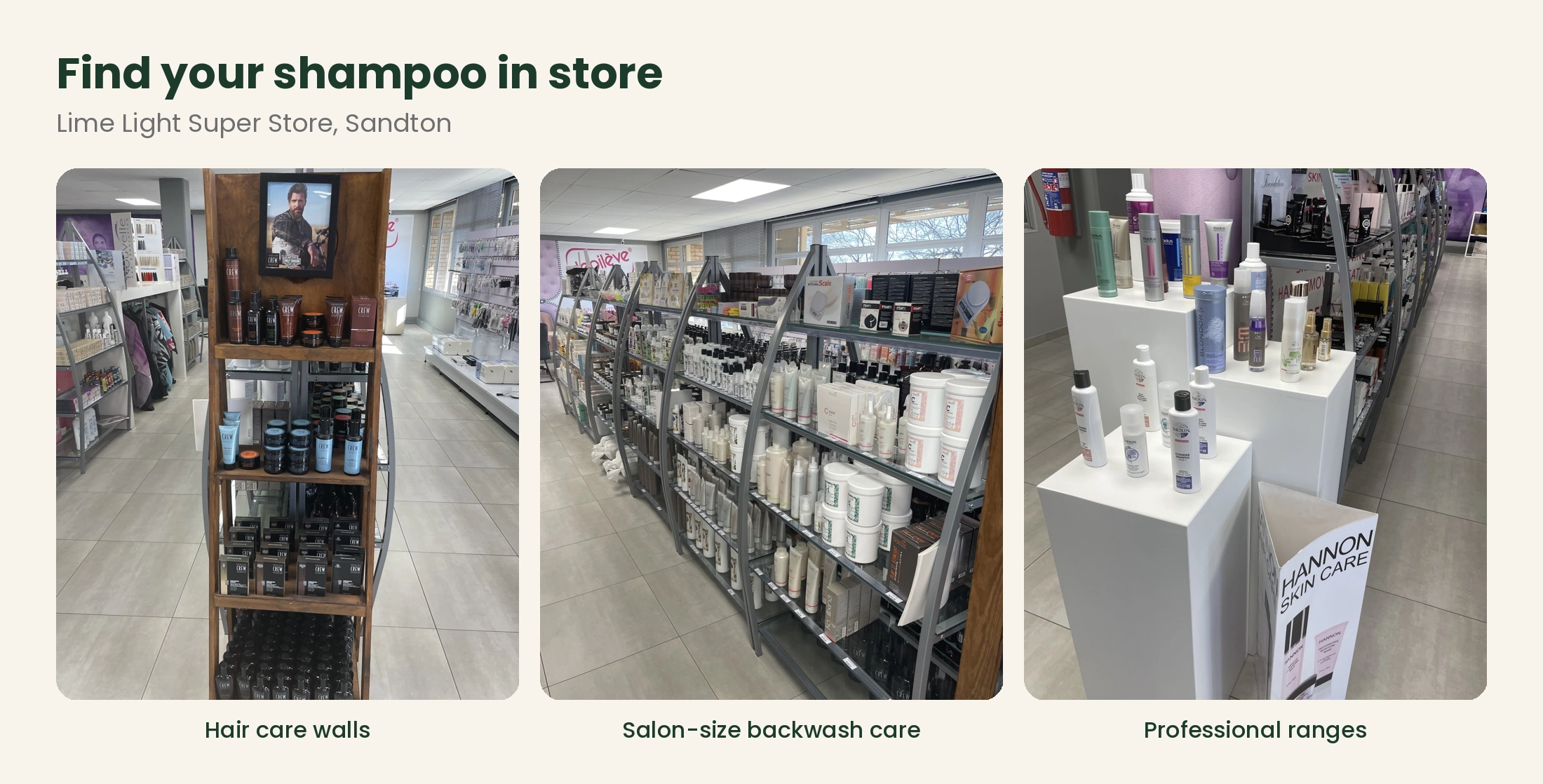
Compare the labels yourself at the Lime Light Super Store, the largest showroom of its kind in South Africa for dedicated wholesale hair and beauty products, at Block B, Tripark, 17 Eastern Service Road, Kelvin, Sandton, or at our branches in Cape Town and Durban.
Frequently asked questions
Is SLES the same as SLS?
No. SLES (Sodium Laureth Sulfate) is milder and less alkaline than SLS (Sodium Lauryl Sulfate), so it is gentler on hair and scalp.
Which sulfate is the mildest?
Of the three, ALS has a pH just under 7, making it mildly acidic and softer on the hair and scalp. SLES is milder than SLS.
Are sulfates bad for coloured hair?
Harsh, alkaline cleansers can fade colour faster. A mildly acidic SLES shampoo (pH 5.5 to 6.5) or a sulfate-free shampoo helps colour last.
Why does my shampoo contain salt?
Sodium chloride (salt) is used to thicken the shampoo and help preserve it. It has a neutral pH of 7.
What pH should a good shampoo be?
Professional shampoos made with SLES are usually balanced at a mildly acidic pH of about 5.5 to 6.5.
Do sulfate-free shampoos clean properly?
Yes. They use gentler cleansers, so they lather less, but they still clean. Oily scalps may like a sulfate shampoo now and then.
Where can I buy professional shampoo in South Africa?
At Lime Light: online at limelighthb.co.za, at the Lime Light Super Store in Sandton and at our branches in Cape Town and Durban.
Shop professional shampoo at Lime Light
- Shop online: limelighthb.co.za, under Hair, then Haircare.
- Visit the Super Store: Block B, Tripark, 17 Eastern Service Road, Kelvin, Sandton, the largest showroom of its kind in South Africa for dedicated wholesale hair and beauty products.
- Open a trade account: visit our website and hit register, fill in the details and we will approve your account.
- Call us: 011 262 2451 | Email: shop@limelighthb.co.za
More from the blog
 The hair bleach and lightener guide: how lightening works, which powder to choose and how to protect the hairHow hair bleach works, the stages of lightening, which developer to use with bleach, blue vs white powder, protecting the hair and toning afterwards.
 Meet Limey! The zestiest mascot in hair, beauty and nailsMeet Limey, Lime Light's fun-loving, adventurous lime with a passion for hair, beauty and nails. His legend, friends, arch-enemy, adventures and beauty secrets.
 What is hair porosity? How to test it, and the best products for low, medium and high porosity hairLow, medium or high porosity hair? How to test your hair porosity at home, what causes it, how to care for it, and why it matters for colour.