

How to read a hair product label: sulphates, silicones, parabens and alcohols explained
Lime Light Hair & Beauty · 05 November 2026 · 8 min read

"Sulphate-free", "paraben-free", "silicone-free"... hair product labels are full of words most people never learn. Here is a plain English guide to what the ingredient list really tells you, and how to choose the right products for your hair or your salon backwash.
Published 13 November 2026 by Lime Light Hair & Beauty Products.
💡 The quick answer
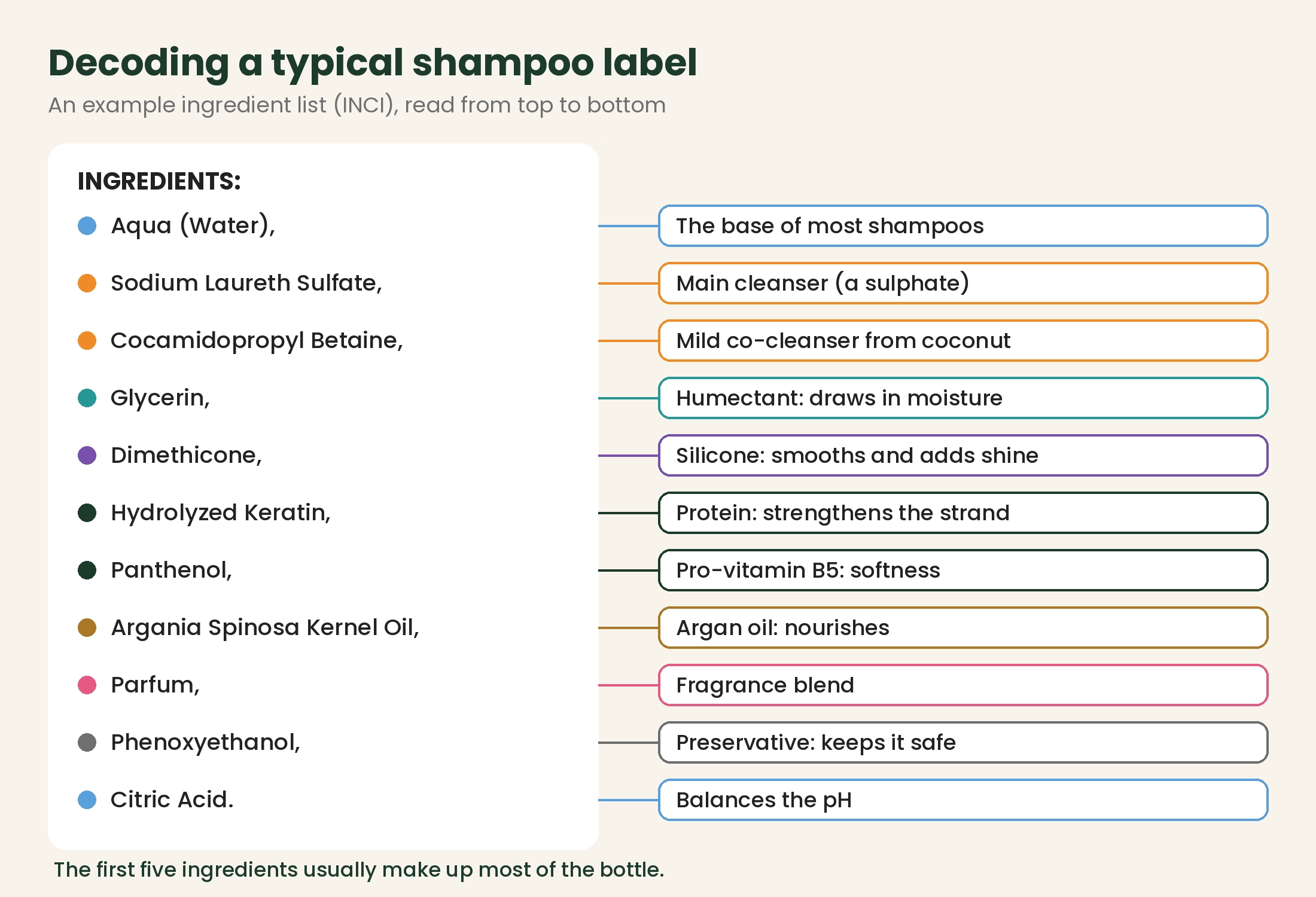
How is the list ordered? From the highest amount to the lowest. The first five ingredients usually make up most of the bottle.
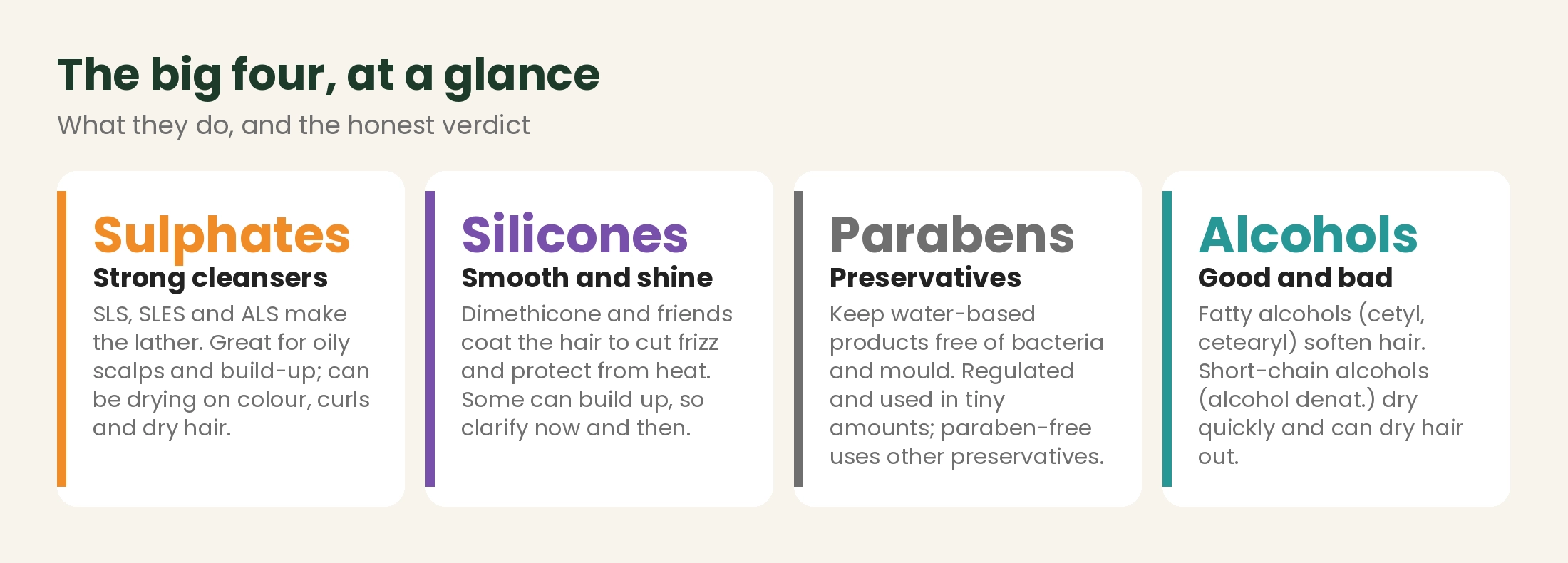
Are sulphates bad? No. They are strong cleansers. Great for oily scalps and build-up, but sulphate-free is kinder to colour, curls and dry hair.
Are silicones bad? No. They smooth, add shine and protect against heat. Some can build up, so use a clarifying wash now and then.
Are parabens dangerous? They are preservatives used in tiny, regulated amounts. Paraben-free products simply use a different preservative.
Is alcohol drying? Only some types. Cetyl and cetearyl alcohol soften hair; alcohol denat. can dry it out.
Where to shop: sulphate-free and label-friendly professional ranges like GoCare, SHAKEBAR, EVERYGreen and milk_shake at Lime Light.
How do I read a hair product ingredient list?
Most professional hair care uses the INCI system (International Nomenclature of Cosmetic Ingredients). It gives every ingredient one standard name, so "water" is written as Aqua and argan oil is Argania Spinosa Kernel Oil, whatever language the bottle is printed in.
Three simple rules make any label easier to read:
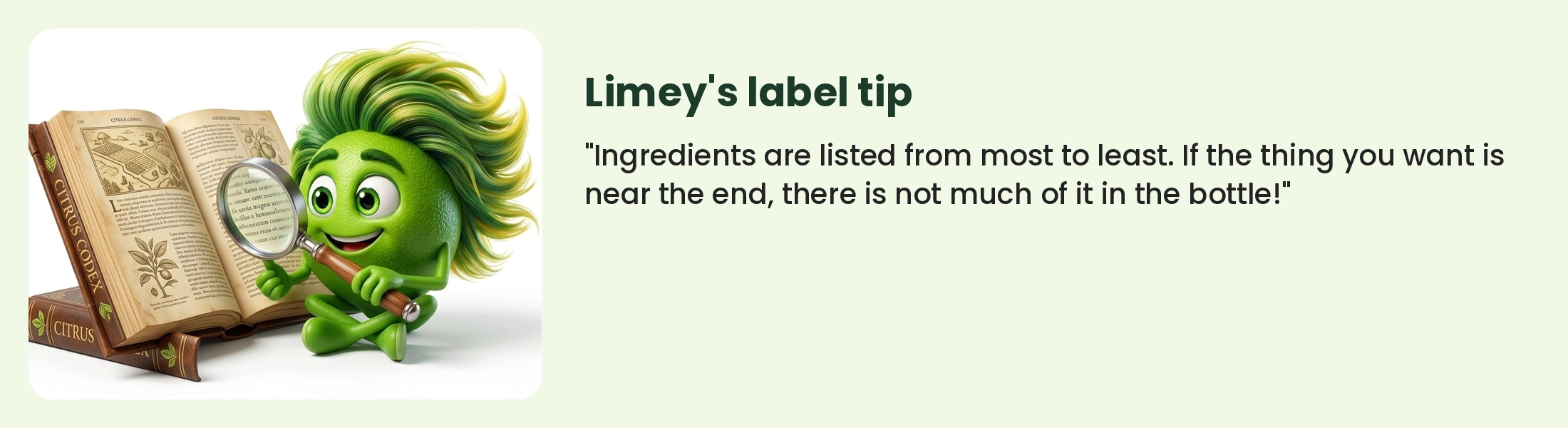
- Top to bottom means most to least. Ingredients are listed in order of how much is in the product.
- The first five do most of the work. Water, the main cleanser and the main conditioning ingredients normally sit here.
- Ingredients under about 1% can be in any order. That is where you will usually find fragrance, preservatives, vitamins and extracts.
What are sulphates, and should I avoid them?
Sulphates are surfactants: cleansers that lift oil and dirt and make a rich lather. The three you will see most often are Sodium Lauryl Sulfate (SLS), Sodium Laureth Sulfate (SLES) and Ammonium Lauryl Sulfate (ALS). We explain the differences between them in our most-read article, Understanding the difference between SLES, SLS and ALS in shampoos.
Sulphates are not "bad". They are simply strong. That is perfect for an oily scalp, heavy styling product or a deep clean before a treatment, but it can strip moisture and fade colour faster on dry, curly or colour-treated hair.
| Cleanser on the label | Strength | Best for |
|---|---|---|
| Sodium Lauryl Sulfate (SLS) | Strongest | Oily scalps, deep cleansing, clarifying |
| Sodium Laureth Sulfate (SLES) | Strong but milder than SLS | Everyday shampoos for normal hair |
| Ammonium Lauryl Sulfate (ALS) | Strong | Oily hair, rich lather |
| Sodium Cocoyl Isethionate | Gentle (sulphate-free) | Dry, coloured and sensitive scalps |
| Coco-Glucoside / Decyl Glucoside | Very gentle (sulphate-free) | Colour care, curls, frequent washing |
| Cocamidopropyl Betaine | Mild co-cleanser | Softens harsher cleansers in most shampoos |
Tip for salons: a sulphate-free shampoo at the backwash keeps fresh colour looking brighter for longer, and gives you an easy retail recommendation for clients to use at home.
Are silicones bad for your hair?
Silicones are the ingredients that make hair feel silky, smooth and shiny. They coat the outside of the strand, cut down frizz, help a brush glide through and protect against heat from blow-dryers and irons. You will spot them by names that end in -cone, -conol or -siloxane.
| Silicone type | Examples on the label | What to know |
|---|---|---|
| Water-soluble | PEG-12 Dimethicone, Dimethicone Copolyol | Rinses out easily with any shampoo |
| Volatile (evaporating) | Cyclopentasiloxane, Cyclomethicone | Gives slip, then evaporates as hair dries |
| Smart or targeted | Amodimethicone | Sticks mostly to damaged areas, so it builds up less |
| Heavier | Dimethicone, Dimethiconol | Best shine and heat protection; can build up on fine hair |
Our honest verdict: silicones are useful, especially in heat protectors, serums and leave-ins. If fine hair starts to feel heavy or flat, use a clarifying or sulphate shampoo once every week or two to reset.
What are parabens, and why are some products paraben-free?
Any product that contains water needs a preservative so bacteria, yeast and mould cannot grow in the bottle. Parabens (such as methylparaben and propylparaben) are one of the oldest and most studied preservatives in cosmetics.
They are used in very small amounts and are regulated. The European Union, for example, sets strict maximum levels and banned five less-studied parabens in 2014. Many brands now choose to be paraben-free because customers ask for it, and preserve their products with alternatives such as phenoxyethanol or sodium benzoate.
🌿 What "free-from" really means
Sulphate-free: uses a gentler cleanser instead of SLS, SLES or ALS.
Paraben-free: uses a different preservative. It is not preservative-free.
Silicone-free: smoothness comes from oils, proteins or conditioning agents instead.
Phosphate-free: no phosphate ingredients, often chosen as a kinder option for the environment.
Fragrance-free: no added parfum, ideal for sensitive scalps.
Is alcohol in hair products bad?
This is one of the most common label myths. The word "alcohol" covers two very different families of ingredients:
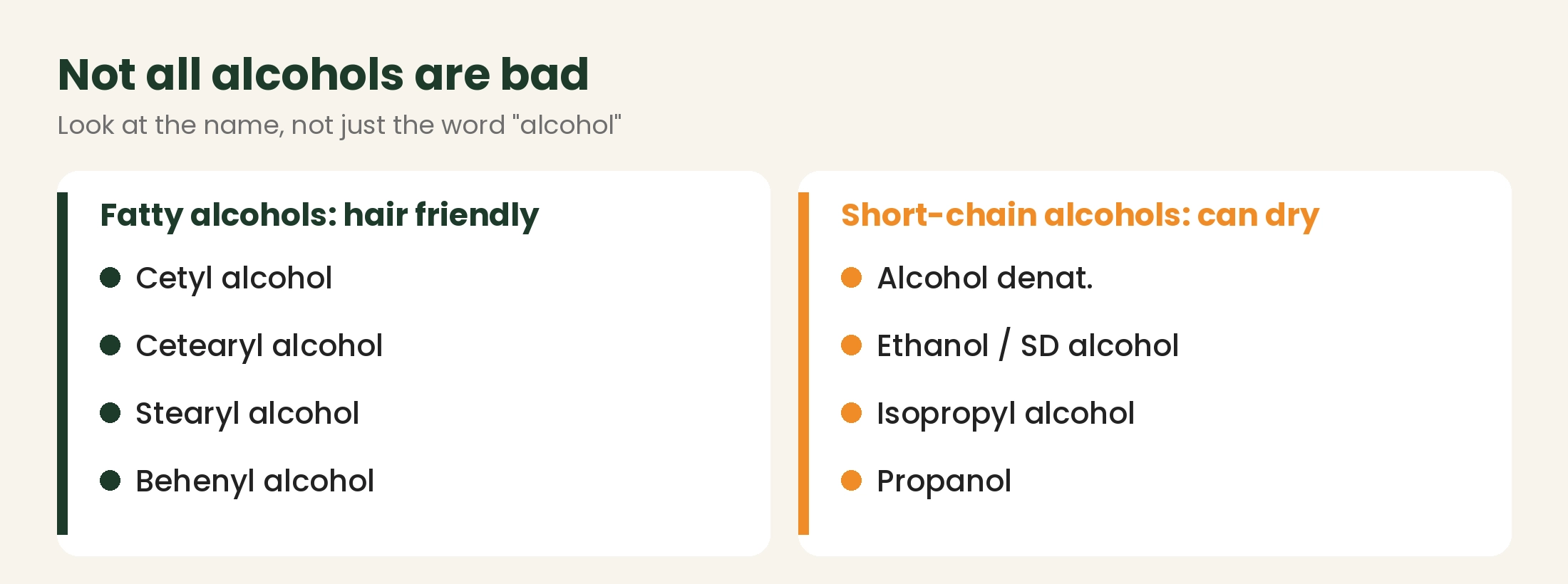
- Fatty alcohols (cetyl, cetearyl, stearyl, behenyl) are waxy, softening ingredients. They make conditioners creamy and help hair feel smooth.
- Short-chain alcohols (alcohol denat., ethanol, SD alcohol, isopropyl alcohol) evaporate fast. They help sprays and mousses dry quickly, but lots of them high on the list can dry out hair.
Which other ingredients should I look for?
| Ingredient on the label | What it does | Good for |
|---|---|---|
| Hydrolyzed Keratin / Hydrolyzed Wheat Protein | Fills gaps in the hair to strengthen it | Damaged, bleached and chemically treated hair |
| Glycerin, Panthenol (pro-vitamin B5) | Humectants that attract and hold moisture | Dry, dull and frizzy hair |
| Argania Spinosa Kernel Oil (argan oil) | Nourishes and adds shine | Dry ends, frizz, finishing |
| Shea Butter (Butyrospermum Parkii) | Rich moisture and softness | Thick, curly and coily hair |
| Citric Acid, Lactic Acid | Keeps the pH slightly acidic | Smooth cuticles and colour care |
| Parfum / Fragrance | Scent | Everyone, except very sensitive scalps |
Why pH matters: hair and scalp sit on the acidic side. Shampoos and conditioners that are slightly acidic help keep the cuticle flat, which means more shine and less colour fade.
How do I choose the right shampoo by reading the label?
| Your hair | Look for | Go easy on |
|---|---|---|
| Colour-treated | Sulphate-free cleansers, UV filters, acidic pH | SLS and frequent clarifying |
| Dry or frizzy | Oils, butters, glycerin, fatty alcohols | Lots of alcohol denat. |
| Fine or oily | Light formulas, sulphate cleansers, volumising proteins | Heavy dimethicone and butters |
| Damaged or bleached | Hydrolyzed keratin and other proteins, panthenol | Harsh daily cleansing |
| Curly and coily | Gentle cleansers, shea, humectants | Strong sulphates, drying alcohols |
| Sensitive scalp | Fragrance-free, gentle glucoside cleansers | Heavy perfume, harsh sulphates |
Which label-friendly hair care brands does Lime Light stock?
Lime Light stocks professional ranges for every ingredient wish list, in salon backwash sizes and retail sizes:
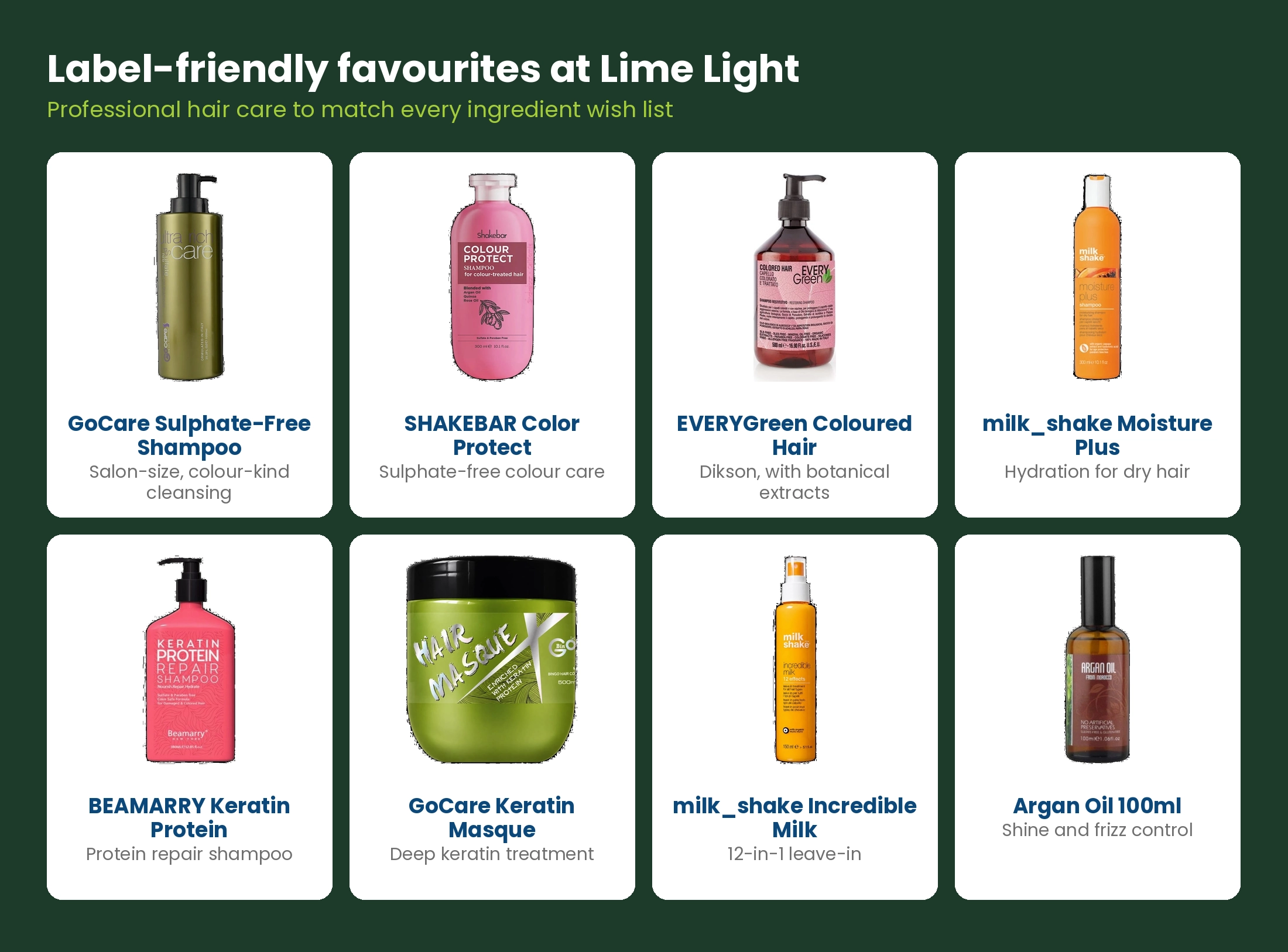
- GoCare: salon-size, sulphate-free shampoo plus treatments, made without parabens, sulphates or phosphates.
- SHAKEBAR: sulphate-free shampoos and conditioners matched to colour, volume, repair and curls.
- EVERYGreen by Dikson: professional care enriched with botanical extracts, for coloured, dry, damaged and oily hair.
- milk_shake: Italian hair care made with milk proteins, including the 12-in-1 Incredible Milk leave-in.
- BEAMARRY: colour-coded shampoos and conditioners, including Keratin Protein Repair.
- Argan Oil from Morocco: the "liquid gold" oil and range for shine and frizz control.
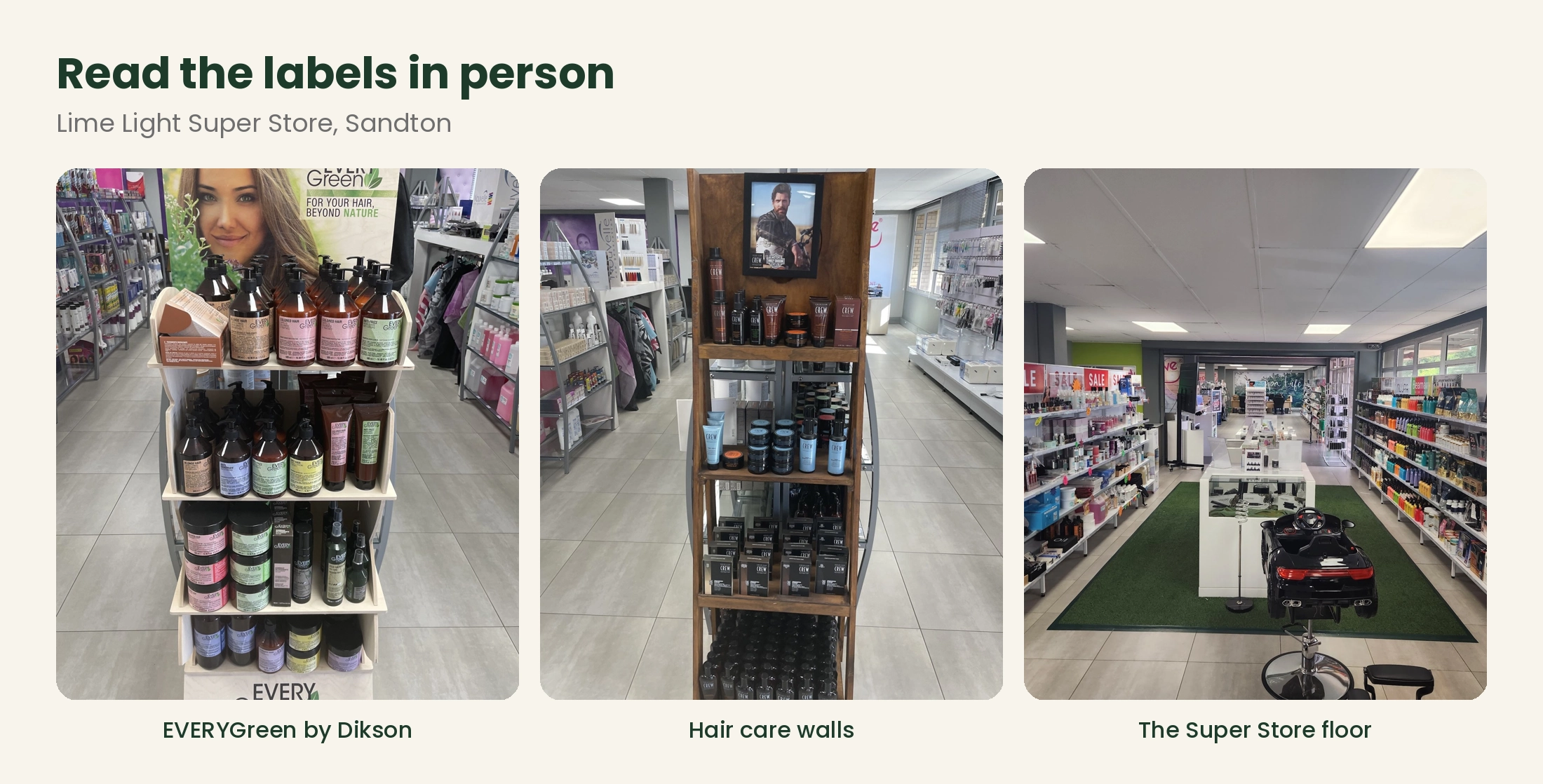
Prefer to read the labels yourself? Visit the Lime Light Super Store, the largest showroom of its kind in South Africa for dedicated wholesale hair and beauty products, at Block B, Tripark, 17 Eastern Service Road, Kelvin, Sandton, or one of our branches in Cape Town and Durban.
Frequently asked questions
What does INCI mean on a shampoo?
INCI stands for International Nomenclature of Cosmetic Ingredients. It is the standard naming system used on ingredient lists around the world.
Is sulphate-free shampoo better?
It is gentler, which makes it better for colour-treated, dry, curly and sensitive hair. Oily scalps and heavy product users may still prefer a sulphate shampoo, at least now and then.
Why does sulphate-free shampoo lather less?
Gentler cleansers make a softer, smaller lather. It is still cleaning. Try a second wash or work it through with a little more water.
Do silicones cause hair loss?
No. Silicones sit on the surface of the hair. They can cause build-up that makes hair feel heavy, which a clarifying shampoo removes.
Are paraben-free products preservative-free?
No. Paraben-free products use a different preservative, such as phenoxyethanol. Water-based products need a preservative to stay safe.
Why is water (aqua) always first?
Most shampoos and conditioners are mostly water, which carries the cleansers and conditioning ingredients across the hair and scalp.
Where can I buy sulphate-free shampoo in South Africa?
At Lime Light: online at limelighthb.co.za, at the Lime Light Super Store in Sandton and at our branches in Cape Town and Durban.
Shop label-friendly hair care at Lime Light
- Shop online: limelighthb.co.za, search "sulphate free".
- Visit the Super Store: Block B, Tripark, 17 Eastern Service Road, Kelvin, Sandton, the largest showroom of its kind in South Africa for dedicated wholesale hair and beauty products.
- Open a trade account: visit our website and hit register, fill in the details and we will approve your account.
- Call us: 011 262 2451 | Email: online@limelighthb.co.za
More from the blog
 How to choose a mannequin head: the student guide to training heads, clamps and starter toolsWhich mannequin head to buy for hairdressing, barbering, colour and braiding courses, plus clamps, tripods, student tools and care tips. Shop at Lime Light.
 Summer 2026 hair and nail trends: what your clients will ask for this festive seasonThe biggest summer 2026 hair and nail trends: soft-melt blonde, copper reds, espresso brunette, jelly nails, chrome and juicy brights, plus the products to recreate them.
 Does rosemary oil really work for hair growth? What the science says, and how to use itWhat the science says about rosemary oil for hair growth, how to use it safely, how long it takes, and the best rosemary hair products in South Africa.